Introduction
Navigating intellectual property rights can be daunting for business owners, yet it’s a critical component of safeguarding innovation and creative work. Patents and copyrights serve different purposes, protecting inventions and creative expressions respectively, but their distinctions go far beyond legal definitions. Grasping these differences determines how a business protects its products, designs, and content from unauthorized use. This exploration begins by clarifying the foundational legal definitions and fundamental differences of patents and copyrights, then advances into analyzing their duration, scope, and economic impact. Finally, it expands the view to understand technological, geopolitical, and societal implications that influence business strategies globally. Together, these chapters provide a holistic framework to empower business owners to make informed decisions about intellectual property protection.
Tables of Contents
Chapter 1: Patent vs Copyright: Legal Definitions and Fundamental Differences
- Distinguishing Patents and Copyrights Through Their Scope and Subject Matter
- Distinct Rights and Protection Periods: Unraveling Patent and Copyright Durations
- Navigating Protection Procedures and Legal Criteria: How Patents and Copyrights Differ Fundamentally
- Weighing Economic and Technological Effects: How Patents and Copyrights Shape Innovation
- The Societal and Geopolitical Dimensions of Patent and Copyright Law
Chapter 2: Patent vs Copyright: Duration, Scope, and Economic Impact
- How Duration Differences Between Patents and Copyrights Shape Economic Innovation
- Navigating the Distinct Boundaries of Patent and Copyright Protection in Innovation and Creativity
- How Patents and Copyrights Shape Innovation and Cultural Economies
- How Geopolitical Factors Shape Patent and Copyright Protections Worldwide
- How Differences in Duration and Scope Shape Society’s Access and Innovation
Chapter 3: Patent vs Copyright: Technological, Geopolitical, and Societal Implications
- Navigating Innovation and Complexity: How Patents and Copyrights Shape Technology and Society
- Navigating Global Tensions: How Geopolitical Forces Shape Patent and Copyright Protections
- Cultural Dynamics and Societal Influence: Navigating the Human Element in Patent and Copyright Law
- Economic Impact and Industry Dynamics in Patent and Copyright Law
- Navigating Legal Frameworks and Policy Challenges in Patent and Copyright Systems
Chapter 1: Patent vs Copyright: Legal Definitions and Fundamental Differences
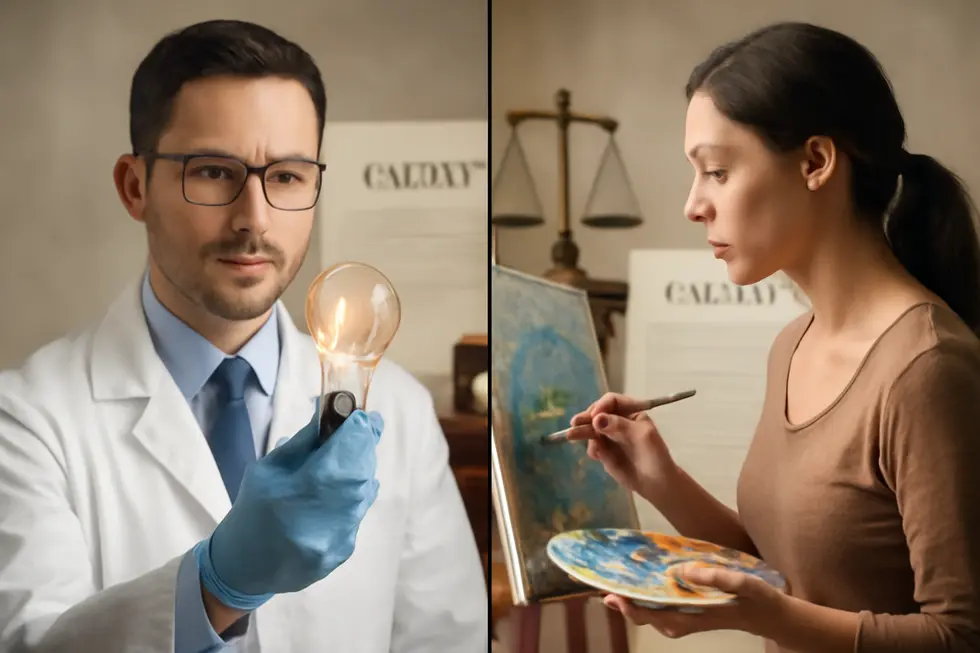
1. Distinguishing Patents and Copyrights Through Their Scope and Subject Matter
Patents and copyrights protect intellectual creations but differ significantly in scope and subject matter. Patents safeguard inventions — new processes, machines, or compositions of matter — that have a functional or technical aspect. This protection incentivizes innovation by granting exclusive rights to inventors for typically 20 years, enabling them to control the use of their technological advances. In contrast, copyrights cover original works of authorship, including literary, artistic, musical, and other expressive forms. Their protection applies to the expression of ideas, not the ideas or facts themselves, securing rights usually lasting the author’s life plus 70 years. This means copyrights focus on how something is expressed, while patents emphasize what is invented. Understanding these differences clarifies why software code, for example, often falls under copyright while new computer hardware patents are protected differently. These distinctions also influence how creators and businesses approach intellectual property protection strategies. For deeper insight into copyright applied to creative works, see this comprehensive guide on copyright law and the public domain.
2. Distinct Rights and Protection Periods: Unraveling Patent and Copyright Durations
Patents and copyrights grant different types of exclusive rights reflecting their unique purposes. Patents confer the right to exclude others from making, using, or selling an invention, typically lasting 20 years from the patent filing date. This limited term balances rewarding innovation with eventually allowing public access to new technologies. In contrast, copyright protects original creative works like literature, music, and art, giving the owner exclusive rights to reproduce, distribute, and perform the work. Copyright durations are generally much longer, often extending to the life of the author plus 70 years. This extended protection supports cultural enrichment and long-term creative incentives.
While patents require a formal application and thorough examination, the rights granted are strictly tied to the invention’s technical claims. Copyright attaches upon creation of the work in tangible form without formal registration, though registration offers legal benefits. The protection scope also differs: patent rights center on functional and utilitarian aspects, while copyright safeguards expression and creativity.
For a deeper understanding of copyright’s economic role, especially for business owners, exploring copyright’s economic definition can provide valuable insights into how duration and rights encourage innovation and creative investment over time.
3. Navigating Protection Procedures and Legal Criteria: How Patents and Copyrights Differ Fundamentally
The procedures and requirements for obtaining patents and copyrights differ significantly due to their distinct legal purposes. Patents demand a rigorous application process involving detailed technical disclosure of an invention, requiring novelty, non-obviousness, and industrial applicability. This often involves prior art searches, formal claims drafting, and examination by patent offices to ensure that the invention represents a genuine advancement. The process can be costly and time-consuming, reflecting the need for precise legal and technical scrutiny.
Conversely, copyright protection arises automatically upon the creation of an original work fixed in a tangible medium, without any formal registration requirement. While registration can enhance enforceability and provide public notice, it is not a prerequisite for protection. Copyright safeguards the expression of ideas—not the ideas themselves—and covers literary, artistic, musical, and other creative works. The threshold is originality and fixation rather than novelty or inventiveness.
This fundamental divergence in protection criteria and procedural demands reflects their different goals: patents protect functional inventions and innovations, while copyright protects creative expression. For a deeper understanding of copyright registration and its legal nuances, reviewing detailed copyright information for books provides useful insights.
4. Weighing Economic and Technological Effects: How Patents and Copyrights Shape Innovation
Patents and copyrights serve distinct roles in fostering creativity and development, each producing unique economic and technological impacts. Patents incentivize inventors by granting exclusive rights to new inventions, typically in technology or applied sciences, allowing creators to capitalize on their innovations. This exclusivity often drives significant investment in research and development, accelerating technological progress. Economically, patents can create market monopolies that encourage innovation but may also limit access or slow diffusion.
Copyright protects original expressions like literary, artistic, and digital works, fostering cultural and informational growth by securing creators’ control over reproduction and distribution. Unlike patents, copyrights are less focused on functional innovation and more on creative content, supporting industries such as publishing, entertainment, and software. Economically, copyrights promote ongoing revenue streams from creative labor while balancing public access through limited durations.
Both rights influence technological and economic landscapes differently, with patents directly shaping technological solutions and copyrights nurturing creative industries. Understanding these nuances is crucial for businesses and creators aiming to protect their intellectual assets effectively. For deeper insights on how copyrights relate to economic dimensions, see this detailed resource on copyright definition and economics.
5. The Societal and Geopolitical Dimensions of Patent and Copyright Law
Patent and copyright protections serve as pillars of intellectual property law but have vastly different societal and geopolitical impacts. Patents incentivize innovation by granting inventors exclusive rights over technological advancements, often driving economic competitiveness and international trade dynamics. Countries leverage patent policies to foster domestic industries or control foreign access to critical technologies. Conversely, copyright safeguards creative expressions such as literature, music, and art, shaping cultural heritage and public access to knowledge. This duality influences global negotiations around fair access, cultural exchange, and information dissemination. Geopolitically, patents frequently underpin strategic economic alliances or disputes, while copyright laws affect global media markets and the flow of cultural content. Divergent enforcement standards and priorities can exacerbate inequalities between developed and developing nations, affecting innovation ecosystems and cultural diversity. Understanding these broader implications reveals how patent and copyright laws not only protect individual creations but also shape global societal frameworks and power balances. For deeper insights on copyright’s role in business contexts, see copyright distribution rights in business.
Chapter 2: Patent vs Copyright: Duration, Scope, and Economic Impact

1. How Duration Differences Between Patents and Copyrights Shape Economic Innovation
The duration of protection granted by patents and copyrights fundamentally influences their economic roles and incentives. Patents typically last up to 20 years from the filing date, offering a finite period for inventors to exclusively capitalize on their technical innovations. This limited term balances rewarding inventive effort and allowing subsequent public access to ideas, thus promoting further innovation. In contrast, copyrights endure far longer—life of the author plus 70 years—providing extended control over creative works such as literature, music, and art. This prolonged protection encourages investment in cultural and artistic endeavors, fostering continuous content creation and preservation.
Economically, patents stimulate rapid technological advancement by granting temporary monopolies that justify costly research and development. The exclusivity motivates businesses to innovate and enter competitive markets. Copyright’s longer duration supports industries where long-term exploitation of creative assets is critical, such as publishing and entertainment, allowing creators and heirs to benefit over generations.
These differing protections highlight how patent and copyright systems complement each other in driving economic growth: patents accelerate technical progress while copyrights nurture cultural development. For a deeper understanding of copyright’s business and legal framework, readers may find valuable insights at copyright language for business owners.
2. Navigating the Distinct Boundaries of Patent and Copyright Protection in Innovation and Creativity
Patents and copyrights serve unique roles in protecting intellectual property, each tailored to distinct subject matters and industries. Patents specifically guard inventions and technical innovations—new processes, machines, or compositions of matter—granting exclusive rights to creators for a limited period. Their scope is inherently precise, focusing on functional and utilitarian aspects of technological advances. In contrast, copyrights protect original creative expressions such as literature, art, music, and software code, emphasizing the form rather than functional concept.
While patent protection demands novelty and non-obviousness, copyright requires originality and fixation in a tangible medium. This difference profoundly shapes their scopes: patents shield the inventive idea itself, which can preclude others from using the core technology, whereas copyrights protect how an idea is presented, allowing others to develop different expressions or implementations.
This delineation influences industries differently. Technology sectors depend on patents to secure competitive advantages through invention exclusivity, driving innovation investment. Meanwhile, creative industries rely on copyrights to preserve the economic value of artistic output without stifling derivative creativity. Understanding these boundaries clarifies why each right is essential and why they complement each other within the broader ecosystem of intellectual property protection.
For deeper insights into how copyright operates in business contexts, see this detailed overview of copyright information for books and creative works.
3. How Patents and Copyrights Shape Innovation and Cultural Economies
Patents and copyrights serve as powerful economic engines, yet they influence innovation and culture in distinct ways. Patents foster technological advancement by granting exclusive rights to inventors, encouraging investment in research and development. This exclusivity enables companies to recoup costs and profit from breakthroughs, which can stimulate further innovation or, at times, create temporary market monopolies. Conversely, copyrights primarily protect creative works—literature, music, films—and enhance the cultural industries by securing creators’ rights to control and monetize their expressions. This protection incentivizes content creation and sustains livelihoods in artistic sectors. However, copyright’s fixed duration and focus on expression rather than underlying ideas promote both protection and eventual public accessibility, balancing private gain with public enrichment. Economically, patents often drive industrial growth and technical innovation, while copyrights stimulate diverse cultural economies and creative entrepreneurship. Their differing scopes and terms reflect these goals, shaping how innovation and cultural wealth circulate within society. Understanding these impacts clarifies the nuanced roles each intellectual property right plays in advancing economic and creative landscapes.
4. How Geopolitical Factors Shape Patent and Copyright Protections Worldwide
Patent and copyright laws are deeply influenced by geopolitical dynamics, shaping their duration, scope, and economic outcomes across different jurisdictions. Nations tailor intellectual property regimes to balance innovation incentives with public access, reflecting cultural, economic, and political priorities. For example, some countries extend patent terms beyond international minimums to encourage investment in cutting-edge technologies, while others limit copyright durations to expand the public domain faster. Trade agreements and international treaties, such as the TRIPS Agreement, play critical roles in harmonizing standards but allow exceptions that accommodate national interests. These geopolitical factors also affect enforcement rigor and scope—for instance, a country’s industrial strategy may lead to broader patent eligibility or specific copyright protections favoring certain industries. Economic impact varies accordingly; regions with strong IP enforcement often attract more foreign investment and drive domestic innovation, whereas others prioritize affordable access to knowledge and technology. Understanding these complexities helps grasp why identical patents or copyrights may differ legally and economically across borders. This nuanced view complements the broader discussion on patent versus copyright distinctions by framing them within geopolitical realities. For more on how copyright operates in business contexts, see copyright information example business.
5. How Differences in Duration and Scope Shape Society’s Access and Innovation
Patents and copyrights influence society distinctly through their variations in duration and scope. Patents grant inventors exclusive rights typically lasting 20 years, focusing narrowly on novel inventions and processes. This limited term aims to encourage innovation by rewarding creators while eventually enriching the public domain. Conversely, copyrights protect creative expressions such as literature, music, and art for the life of the author plus decades, offering broader but different exclusivity.
These divergent terms affect accessibility and innovation cycles. Patent protections can accelerate technological advances but may also impede competition if extended or overly broad. Copyrights’ longer duration supports cultural preservation and creator livelihood but may delay public access to works, influencing how knowledge and creativity circulate.
The societal impact of these differences plays out in economic growth patterns, cultural development, and the balance between incentivizing creativity and fostering shared resources. Understanding this dynamic is key for policymakers navigating intellectual property laws. For a deeper insight into the economic perspective of copyrights, see copyright definition economy for business.
Chapter 3: Patent vs Copyright: Technological, Geopolitical, and Societal Implications

1. Navigating Innovation and Complexity: How Patents and Copyrights Shape Technology and Society
Innovation drives progress, but the frameworks of patent and copyright law impose distinct challenges and opportunities on technological development. Patents protect inventions by granting exclusive rights to novel technical solutions, encouraging investment but often sparking disputes over scope and originality. Copyrights, by contrast, safeguard creative expressions like software code and digital content, focusing on fixation rather than functionality. Technology’s rapid evolution strains these regimes, especially as artificial intelligence, software patents, and digital media blur traditional boundaries. Geopolitically, varying patent and copyright standards across countries influence global innovation, creating competitive advantages or barriers to entry. Societal implications arise as these protections affect access, collaboration, and knowledge sharing—critical for inclusive technological growth. Balancing the protection of inventive effort with public interest necessitates adaptive legal interpretations and international cooperation. Understanding the technological nuances behind patentability versus copyrightability is crucial; for instance, linking to detailed insights on copyright definition for computer-based works clarifies these distinctions in practice. Ultimately, the interplay between patent and copyright law shapes how societies harness and distribute technological breakthroughs.
2. Navigating Global Tensions: How Geopolitical Forces Shape Patent and Copyright Protections
The geopolitical landscape profoundly influences how nations approach patents and copyrights, shaping innovation and cultural exchange worldwide. Countries often tailor their intellectual property (IP) frameworks to reflect economic goals, security concerns, and international alliances. For instance, patent laws may favor domestic industries by imposing stricter standards or longer protections to stimulate technological advancement. Conversely, copyright regimes can mirror political priorities related to cultural sovereignty and information control.
Global trade agreements and organizations play pivotal roles in harmonizing IP standards, yet geopolitical rivalries complicate enforcement and cooperation. Tensions between developed and developing nations highlight disparities in access to patented technologies and copyrighted content, affecting public health, education, and economic growth. Some nations resist stringent IP protections fearing monopolies that stifle local innovation, while others leverage strong support for IP to attract investment and showcase technological leadership.
Ultimately, the interplay between geopolitical interests and intellectual property rights molds not only legal frameworks but also the societal landscape of innovation and creativity. Understanding these dynamics is essential for grasping the broader impact of patent and copyright laws in a connected yet divided world. For a deeper grasp of copyright’s economic role, explore copyright definition economics business.
3. Cultural Dynamics and Societal Influence: Navigating the Human Element in Patent and Copyright Law
Patents and copyrights, while legal frameworks protecting innovation and creativity, profoundly shape societal values and cultural evolution. Patents, rooted in promoting technological advancement, often reflect economic priorities that can influence global power dynamics. They may restrict access to critical inventions, disproportionately affecting developing regions and widening technological divides. Conversely, copyrights protect artistic and literary expressions, fostering cultural diversity and collective memory preservation. However, overly stringent copyright enforcement can stifle cultural exchange and creativity, especially in digitally connected societies where information flows freely. Both systems interact with cultural norms differently across jurisdictions, reflecting varying attitudes toward ownership and communal benefit. Understanding these cultural nuances is vital, as intellectual property rights do not operate in isolation—they intertwine with societal ethics, access to knowledge, and creative freedom. Recognizing how these rights influence social development encourages more equitable policies that balance innovation incentives with public interest. For deeper insights on how copyright shapes creative business landscapes, see the resource on copyright language for business owners.
4. Economic Impact and Industry Dynamics in Patent and Copyright Law
The economic consequences of patents and copyrights ripple throughout industries, shaping innovation and market competition. Patents grant inventors exclusive rights to technological advancements, incentivizing investment in research and development by promising time-limited monopolies. This exclusivity can accelerate technological progress but may also lead to costly litigation and restricted access to essential technologies, impacting sectors like pharmaceuticals and manufacturing. Conversely, copyrights protect original creative expressions such as literature, music, and software, fostering cultural and digital economies by enabling creators to monetize their work. Industries centered on content creation often rely on copyright frameworks to sustain revenue streams and control distribution.
From an industry perspective, patents often require substantial upfront costs and legal expertise, primarily serving firms with considerable resources. Meanwhile, copyrights, frequently automatic upon creation, provide more immediate protection with less procedural burden, benefiting artists and small enterprises. However, both legal systems intersect with geopolitical factors, influencing global trade and intellectual property enforcement. Understanding these economic and industrial nuances reveals the delicate balance policymakers must manage to encourage innovation while ensuring fair competition and public access.
For a deeper understanding of copyright’s role in business contexts, explore insights on copyright information example business.
5. Navigating Legal Frameworks and Policy Challenges in Patent and Copyright Systems
The legal frameworks governing patents and copyrights serve distinct purposes but often intersect within technological and societal contexts. Patents protect inventions by granting exclusive rights for a limited period, incentivizing innovation. Copyrights safeguard original expressions such as literary, artistic, and software works, granting creators control over reproduction and distribution. This division shapes policy debates around how best to balance innovation incentives with public access. Technological advancements, especially in digital and biotech fields, challenge traditional boundaries by blurring what qualifies for patentability versus copyright protection. Geopolitically, global disparities in laws create tension, as nations strive to protect domestic industries while promoting cross-border knowledge sharing. Policymakers wrestle with enforcement complexities, addressing issues like patent trolling, copyright infringement, and the fair use doctrine. These debates extend to societal impacts, including access to medicines, educational materials, and digital content. Understanding these nuances reveals why legal strategies must evolve, harmonizing protection with innovation diffusion. For deeper insight into related intellectual property categories impacting businesses, refer to comprehensive discussions on intellectual property rights and their business applications.
Final thoughts
Understanding the distinctions between patents and copyrights equips business owners with the knowledge to strategically protect their intellectual assets. Patents safeguard inventions and innovations with defined scopes and limited durations that encourage technological advancement and competitive edge. Copyrights preserve creative expressions, ensuring ongoing economic benefits and cultural influence for creators and companies alike. Beyond legal parameters, the wider implications of these protections influence market dynamics, international relations, and societal growth. By comprehensively grasping these dimensions, business owners can better navigate the complexities of intellectual property, enhance their value proposition, and shield their enterprises from infringement risks. The right IP strategy creates lasting advantages, securing both innovation and creativity in an ever-evolving business landscape.
Your IP is the foundation of your success – let’s protect it together before it’s too late. We can’t wait to help you turn your ideas into legally secured assets.
About us
undefined