Introduction
In an increasingly competitive landscape, understanding sample copyright is vital for business owners looking to safeguard their creative works. Copyright law provides a framework that grants exclusive rights to original materials, offering essential protection from unauthorized use. This guide delves into sample copyright, outlining its importance, registration processes, fair use principles, and much more. By exploring these facets, readers will gain a comprehensive understanding of how to navigate copyright complexities, protect their intellectual property, and ensure proper attribution for academic works, all while enhancing their business endeavors.
Tables of Contents
Chapter 1: Copyright Essentials: Safeguarding Creative Expressions
- Copyright Demystified: Empowering Creators with Legal Protections
- Navigating Sample Copyright: Essential Rights, Protections, and the Crucial Role of Permission
- Navigating Fair Use: Exploring Sample Copyright Rights and Exceptions
- Sample Copyright: Navigating Legal Rights, Protections, and Duration Dynamics
- Sample Copyright: The Global Landscape of Rights and Licensing
Chapter 2: Unlocking the Benefits of Copyright Registration for Creatives
- The Strategic Advantages of Copyright Registration: A Key to Protecting Creative Works
- Navigating the Copyright Registration Process: A Practical Guide
- Critical Aspects of Licensing Agreements and Ownership Documentation
- Unlocking Economic Potential: The Financial Advantages of Copyright Registration
- Empowering Creators Through Sample Copyright Registration: Navigating Rights and Legal Remedies
Chapter 3: Understanding the Importance of Purpose and Character in Fair Use Scenarios
- Purpose and Character of Use: Essential Criteria in Fair Use Evaluations
- The Crucial Role of Copyrighted Work Nature in Fair Use Assessments
- Understanding Amount and Substantiality in Fair Use Considerations
- Assessing Market Harm: The Key to Navigating Fair Use in Copyright
- Illustrative Examples: Unpacking Fair Use in Copyright Scenarios
Chapter 4: The Essential Role of Copyright Notices in Creative Works
- Decoding Copyright Symbols: Unpacking Their Significance and Structure
- Unpacking Copyright Notices: Elements of Ownership Assurance
- Navigating the Legal Landscape with Sample Copyright Notices
- Creative Commons and the Evolving Landscape of Copyright Notices
- Essential Elements of Copyright Notices: Guidelines for Creators
Chapter 5: Unlocking Creative Commons: Navigating Public Domain Works for Free Use
- Exploring the Rich Landscape of Public Domain: Freedom to Create and Innovate
- Essential Copyright Knowledge: Safeguarding Your Creative Works
- The Dynamic Interplay of Public Domain and Sample Copyright on Creative Economies
- International Perspectives on Public Domain and Sample Copyright Laws
- The Intersection of Public Domain Expansion and AI Innovation: Adapting to New Realities
Chapter 6: Navigating Ownership and Attribution in Academic Copyright
- Complexities of Ownership and Attribution in Academic Collaboration
- Crafting Clear Agreements: Joint Authorship and Its Copyright Implications
- Navigating Copyright Challenges in Digital Educational Content
- The Challenges of Attribution in AI-Generated Academic Works
- Understanding Fair Attribution and Compliance in Academic Copyright Policies
Chapter 1: Copyright Essentials: Safeguarding Creative Expressions

1. Copyright Demystified: Empowering Creators with Legal Protections
Copyright serves as a cornerstone of intellectual property law, granting creators exclusive rights to their original works. This protection automatically takes effect once a work is fixed in a specific form, safeguarding expressions across diverse formats such as literature, music, art, and software. Creators can bolster their rights through registration, which simplifies legal recovery in case of infringement. It is crucial to understand the nuances of copyright, including the concept of fair use and the rules surrounding ownership and transfer, to navigate the complex landscape of creative rights effectively. For comprehensive insights, explore the resources available at https://trademark2go.com/copyright-information-for-books/.
2. Navigating Sample Copyright: Essential Rights, Protections, and the Crucial Role of Permission
Copyright offers essential protections for creators, granting them exclusive rights over their original works, such as literature and music. While these rights automatically arise upon creation, registering with an official body strengthens legal recourse in infringement disputes. Permission is vital for using someone else’s copyrighted material unless it falls under fair use or public domain exemptions. Understanding these nuances ensures compliance and fosters respect for creators, promoting a healthier creative economy that values original expressions.
3. Navigating Fair Use: Exploring Sample Copyright Rights and Exceptions
Sample Copyright determines how original creative expressions, like music, can be used and protected under the law. The fair use doctrine, crucial in discussions of sampling, allows limited use of copyrighted material without explicit permission. Despite its potential flexibility, fair use evaluations rely on four key factors: the purpose of use, the nature of the work, the amount used, and the market impact. This framework protects creativity, yet in music, unauthorized sampling often risks infringement unless it’s demonstrably transformative or educational. To understand how copyright interacts with creative processes, consult legal analyses on U.S. Copyright Law and Fair Use for deeper insights.
4. Sample Copyright: Navigating Legal Rights, Protections, and Duration Dynamics
Sample copyright offers creators exclusive legal rights to their original works, granting them control over reproduction, distribution, and adaptation. Notably, this protection arises automatically upon fixation in a tangible medium, though registering with the Copyright Office enhances legal recourse. The duration of these rights varies: typically, copyright lasts 70 years after the creator’s death or 95 years from publication for corporate works. After this period lapses, works enter the public domain, allowing unrestricted use. For more insights on copyright principles, refer to the comprehensive guide on copyright law and public domain.
5. Sample Copyright: The Global Landscape of Rights and Licensing
Sample copyright encompasses the legal rights granted to creators over their original works, particularly in music where sampling is prevalent. This protection is typically automatic upon creation, aided by international treaties like the Berne Convention that facilitate reciprocal protection across borders. Copyright holders retain exclusive rights to reproduce and distribute their work, requiring licensing for any derivative uses. As the duration of copyright varies globally, understanding these rights is crucial for navigating the complexities of copyright infringement and compliance.
Chapter 2: Unlocking the Benefits of Copyright Registration for Creatives
1. The Strategic Advantages of Copyright Registration: A Key to Protecting Creative Works
Copyright registration serves as a powerful tool for creators, providing essential legal protection and enhanced enforcement rights. When registered, a copyright holder gains prima facie evidence of ownership, making litigation against infringers more straightforward. Furthermore, registration acts as a deterrent, signaling to potential violators that the work is protected. Financially, it facilitates licensing opportunities and the potential for statutory damages in infringement cases. In our digital world, protecting original expressions has never been more crucial, solidifying the importance of registration for safeguarding intellectual property.
2. Navigating the Copyright Registration Process: A Practical Guide
To safeguard your creative work effectively, it’s vital to follow a systematic approach to copyright registration. Start by thoroughly documenting your work, gathering drafts and supporting materials, which helps in establishing originality. Accurately categorize your work—be it literary, artistic, or software—to ensure proper processing at the copyright office. Although copyright protection is automatic when your work is fixed, registration is needed to enforce those rights and claim statutory damages. Prepare your application electronically for efficiency, paying the required fee. After examination, you will receive confirmation along with a certificate proving your ownership, reinforcing your protection against unauthorized use.
3. Critical Aspects of Licensing Agreements and Ownership Documentation
Licensing and ownership records play a vital role in sample copyright registration, clearly defining the legal rights associated with a work. Written licensing agreements, signed by the copyright holder or an authorized agent, establish usage parameters, safeguarding both parties. Maintaining detailed ownership records is essential to prove authenticity and manage rights effectively. While copyright registration enhances claims, keeping copies of permission documents is equally important to prevent disputes. Together, these elements create a strong legal foundation, facilitating the effective management of copyrighted material.
4. Unlocking Economic Potential: The Financial Advantages of Copyright Registration
Copyright registration serves as a powerful strategy for enhancing the economic value of creative works. By formalizing ownership, creators can transform their intellectual property into assets that generate revenue through licensing, sales, and royalties. This formal recognition not only attracts potential investors, as businesses with registered copyrights signal reduced risk, but also establishes a presumption of validity in legal disputes, strengthening enforcement capabilities. Furthermore, tax advantages associated with registered copyrights can also amplify financial returns, making registration a crucial step for maximizing the economic impact of creative endeavors.
5. Empowering Creators Through Sample Copyright Registration: Navigating Rights and Legal Remedies
Registering your copyright not only affirms your ownership but also amplifies your legal privileges significantly. This formal registration creates prima facie evidence of your rights, making it easier to assert those rights in court when disputes arise. Moreover, registration is essential if you wish to file a copyright infringement lawsuit; without it, you forfeit access to crucial legal remedies, including injunctions or monetary damages. Furthermore, registered copyright holders can pursue civil remedies such as statutory damages and profit recovery, allowing for robust enforcement of their rights. By enhancing protection against digital infringements and providing opportunities for licensing or monetizing creative works, copyright registration becomes an invaluable asset for creators aiming to safeguard and leverage their intellectual property effectively.
Chapter 3: Understanding the Importance of Purpose and Character in Fair Use Scenarios

1. Purpose and Character of Use: Essential Criteria in Fair Use Evaluations
Fair use is a crucial legal principle allowing limited use of copyrighted material, governed by Section 107 of the U.S. Copyright Act. It emphasizes the purpose and character of a use, distinguishing between commercial aims and transformative uses. Generally, non-commercial educational or scholarly uses are favored, whereas commercial uses might impede fair use claims. Moreover, transformative works—those that add new meaning—often align better with fair use principles, underscoring the necessity of a nuanced assessment in copyright matters. For more on copyright nuances, explore this guide on copyright language for business owners.
2. The Crucial Role of Copyrighted Work Nature in Fair Use Assessments
Understanding the nature of the copyrighted work is vital when evaluating fair use. Generally, courts favor the use of factual or published works over creative or unpublished materials, as the former are more conducive to educational and research purposes. For instance, utilizing excerpts from a factual text in a classroom setting is likely to be permissible under fair use, while employing a song in a commercial context without consent is typically not. This distinction shapes the landscape of how copyrighted works can be leveraged responsibly.
3. Understanding Amount and Substantiality in Fair Use Considerations
The amount and substantiality of the portion used is pivotal in assessing fair use under copyright law. When utilizing a work, employing only what is essential favors fair use, whereas copying the “heart” of the work—even briefly—can weigh against it. The usage amount must be proportionate to the new purpose; smaller, less significant portions lean towards fair use. Yet, even minimal use can challenge fair use if it captures the essence of the work. Such nuances necessitate careful deliberation for effective compliance with copyright regulations. For further insights, visit copyright information for books.
4. Assessing Market Harm: The Key to Navigating Fair Use in Copyright
The impact on the market is crucial in determining fair use regarding copyright. This factor examines whether the use of copyrighted material substitutes for the original work, potentially diminishing its demand. If unauthorized use harms the original’s market—such as its sales or licensing opportunities—it complicates the fair use claim. Analyzing market effects is paramount, particularly in contexts like AI training, where some uses may be deemed transformative and less harmful, while others raise uncertainties, necessitating a careful assessment of individual situations. For more on related topics, see https://trademark2go.com/copyright-definition-economics-business/.
5. Illustrative Examples: Unpacking Fair Use in Copyright Scenarios
Fair use serves as a vital safeguard within U.S. copyright law, allowing the use of copyrighted works under specific circumstances. For instance, in an educational setting, a teacher used clips from a documentary for a class video, asserting fair use based on its educational intent. Transformative uses, such as a comedian’s politically charged parody of a popular song, also highlight fair use’s flexibility. Each scenario underscores the importance of analyzing use purpose, copyright nature, and market impact to ascertain fair use validity.
Chapter 4: The Essential Role of Copyright Notices in Creative Works
1. Decoding Copyright Symbols: Unpacking Their Significance and Structure
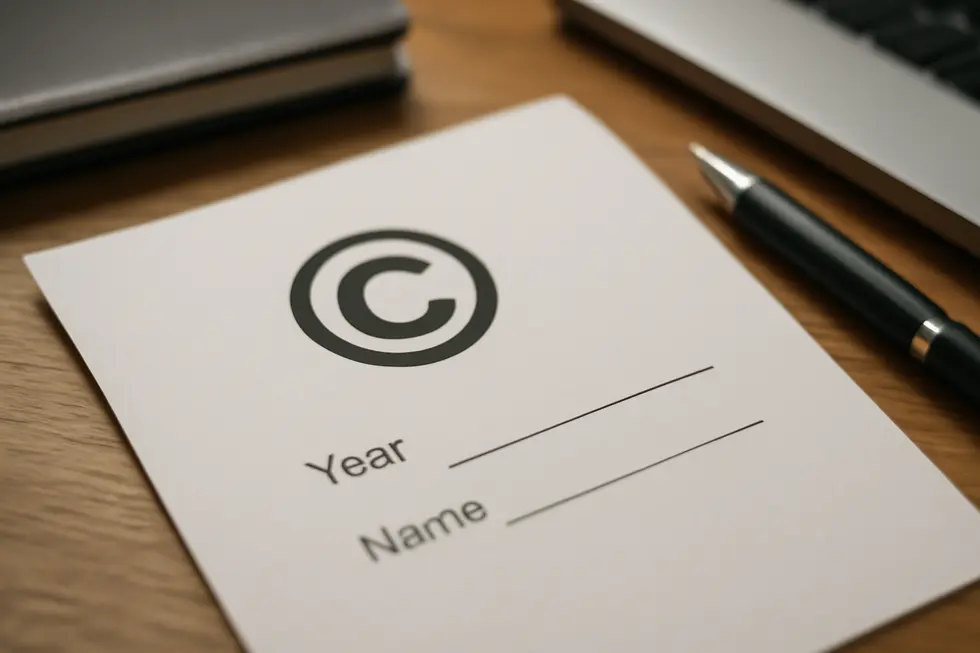
A copyright notice plays an integral role in protecting creative works. This notice serves to inform the public that a work is safeguarded by copyright law and also identifies the copyright owner, along with indicating the year of first publication. Typically, a copyright notice comprises three key elements: the copyright symbol (©), the year of first publication, and the owner’s name. Displaying such a notice aids in establishing legal recognition of ownership and acts as a deterrent against unauthorized use. While inclusion of these details is not legally mandated, it significantly strengthens claims in cases of infringement and ensures clarity about the provenance of creative works, fostering respect for intellectual property.
2. Unpacking Copyright Notices: Elements of Ownership Assurance
A copyright notice is essential for asserting ownership rights in the realm of creative works. It provides clarity by including the copyright symbol (©), the year of first publication, and the name of the copyright owner. For example, © 2024 John Doe clearly communicates that John Doe owns the rights to the work published in 2024. While not legally required, such notices are strongly recommended as they deter infringement and support enforcement actions, such as DMCA takedown notices. Owners can customize these notices to fit different platforms, ensuring clear ownership representation and protecting against unauthorized use. For more on the legal implications of notices, check out resources on copyright information for books.
3. Navigating the Legal Landscape with Sample Copyright Notices
Sample copyright notices are essential tools for asserting rights in legal contexts. They not only clarify ownership but also facilitate communication with service providers under the DMCA, expediting the removal of infringing material. Key components include a clear identification of the copyrighted work, the location of the infringement, and the copyright holder’s contact details. By adhering to a standardized format, these notices streamline dispute resolution and serve as a deterrent against unauthorized use, ultimately protecting intellectual property rights.
4. Creative Commons and the Evolving Landscape of Copyright Notices
The advent of Creative Commons (CC) licenses has revolutionized the way copyright notices operate, providing creators with more flexibility in defining the use of their works. Unlike traditional copyright notices that restrict all use unless authorized, CC licenses empower authors to select specific conditions under which their creations may be shared. This includes choices that allow modifications or restrict usage to non-commercial purposes, fostering collaboration and broad accessibility. The combination of elements like attribution, non-commercial use, and share-alike principles nurtures a more open and innovative creative ecosystem, addressing the need for both protection and freedom in digital spaces. For broader insights into how Creative Commons facilitates collaboration and reduces legal barriers in creative works, see more on copyright alternatives and creative freedom.
5. Essential Elements of Copyright Notices: Guidelines for Creators
Copyright notices are fundamental tools for creators, signaling that a work is protected and delineating ownership rights. While not mandated by law, their presence conveys authority and serves as a powerful deterrent against infringement. A well-formed copyright notice consists of three key components: the copyright symbol ©, the year of first publication, and the name of the copyright owner. This clarity supports legal action and acknowledges the creator’s rights, thus playing an indispensable role in effective copyright management. For more on copyright practices, visit https://trademark2go.com/copyright-information-example-business/.
Chapter 5: Unlocking Creative Commons: Navigating Public Domain Works for Free Use
1. Exploring the Rich Landscape of Public Domain: Freedom to Create and Innovate
Public domain works represent a treasure trove of creative expressions that are free from copyright constraints. These works can emerge from various circumstances, including the expiration of copyright terms, failures to meet copyright formalities, or intentional dedications by creators. Notably, U.S. federal government works enter the public domain immediately. The freedom to use, adapt, or distribute these materials liberates creativity while necessitating awareness of potential trademark issues. Thus, while public domain offers limitless possibilities, users should always credit original sources to foster academic integrity.
2. Essential Copyright Knowledge: Safeguarding Your Creative Works
Copyright law automatically protects original works of authorship when they are fixed in a tangible medium. Creators receive exclusive rights to reproduce, distribute, and perform their works, while also having the ability to create derivative works. Although registration with the U.S. Copyright Office isn’t required, it is advantageous for legal enforcement. Understanding what qualifies for protection, the duration of rights, and recognizing public domain works is vital for safeguarding your creativity. Using copyright notices acts as an effective deterrent against infringement, clarifying ownership.
3. The Dynamic Interplay of Public Domain and Sample Copyright on Creative Economies
The public domain serves as a vital reservoir of creativity, granting free access to works that spur innovation across various fields. While losing exclusive rights can challenge original creators economically, it simultaneously empowers them to build on existing ideas, driving new artistic expressions. Conversely, sample copyright safeguards rights holders but may inadvertently stifle creativity through extensive restrictions. Balancing these elements is crucial; public domain fuels cultural growth while copyright upholds financial viability within creative industries, ensuring a sustainable ecosystem.
4. International Perspectives on Public Domain and Sample Copyright Laws
Understanding the global variations in public domain and sample copyright laws is crucial for creators and users alike. Copyright durations differ worldwide: for instance, while many European countries and the United States offer protection for the life of the author plus 70 years, countries like China provide only 50 years. Additionally, formalities around copyright registration vary, with the U.S. requiring registration for certain benefits, unlike many EU nations where copyright is granted automatically. Works may enter the public domain in one jurisdiction yet remain protected in another, complicating international utilizations. The legal landscape shifts depending on treaties like the Berne Convention, which facilitates recognition of copyright across borders but does not establish a universal standard. Creators must undertake thorough legal reviews when navigating sampling and public domain issues to ensure compliance.
5. The Intersection of Public Domain Expansion and AI Innovation: Adapting to New Realities
As the public domain expands, with works from 1930 moving into this realm in 2026, opportunities proliferate for creative exploration. This shift not only democratizes access to cultural works but raises complex challenges, particularly amid the rise of AI-generated content. The ambiguity surrounding the copyright status of AI outputs complicates intellectual property rights, with potential liabilities lingering for creators. Amid these developments, stakeholders must navigate brand risks and institutional barriers that inhibit fair access to heritage materials, calling for a reassessment of IP strategies in an increasingly interconnected world.
Chapter 6: Navigating Ownership and Attribution in Academic Copyright

1. Complexities of Ownership and Attribution in Academic Collaboration
The dynamics of ownership in academic works become intricate when institutional control enters the frame. While authors generally retain copyright over their original research, universities often assert claims over works produced with their resources. This dual control complicates attribution, particularly in collaborative environments, where defining authorship becomes challenging in the presence of multiple contributors, including AI tools. Ensuring fair attribution amidst institutional policies and diverse stakeholders is vital for maintaining integrity and recognizing individual contributions, particularly when intellectual property rights are reassigned to sponsors.
2. Crafting Clear Agreements: Joint Authorship and Its Copyright Implications
Collaboration in academic projects often results in joint authorship, necessitating clear agreements on authorship intent and copyright ownership. When multiple contributors merge their efforts, documenting their roles is crucial to prevent disputes. Proper management of intellectual property ensures that each party understands their rights and responsibilities. This responsibility extends to securing permissions for previously published content. As academia grows more interdisciplinary, developing adaptable legal frameworks to address collaboration will be essential for fostering innovation while protecting the rights of all contributors.
3. Navigating Copyright Challenges in Digital Educational Content
In the dynamic landscape of online education, digital content ownership and attribution present intricate challenges. Educators often lose clarity over copyright when course materials, created at great effort, are shared on institutional or third-party platforms. This ambiguity can lead to disputes about who truly owns the content. Furthermore, insufficient intellectual property policies exacerbate these issues. As educational digital platforms gain prominence, clear licensing agreements and transparent attribution practices become crucial for protecting creators’ rights and ensuring academic integrity. Such frameworks not only respect authorship but also foster an environment of collaboration and creativity.
4. The Challenges of Attribution in AI-Generated Academic Works
AI-generated academic works present complex challenges in copyright ownership and attribution, primarily due to the fundamental requirement for human authorship within copyright law. As AI autonomously generates content, the lack of human creative input raises concerns regarding eligibility for copyright protection. When AI acts merely as a tool, the human guiding its output typically holds authorship. However, fully autonomous works may slip into public domain, leading to potential ownership disputes. Furthermore, the ethical implications of using AI without proper attribution pose risks to academic integrity, while concerns over training data highlight the need for clear guidelines to navigate these evolving legal landscapes.
5. Understanding Fair Attribution and Compliance in Academic Copyright Policies
Navigating institutional policies in academic environments requires a solid grasp of copyright ownership and fair use principles. Typically, authors maintain their copyright unless otherwise contracted. Fair use exceptions allow limited use of copyrighted material for educational purposes, but careful analysis is crucial to comply with legal standards. Institutions often provide resources to educate faculty and students on copyright policies, emphasizing the significance of proper attribution and understanding publisher agreements. Adopting openly licensed materials can further empower creators while respecting ownership rights.
Final thoughts
Understanding sample copyright is not just an academic exercise; it’s a practical necessity for business owners. By grasping the legal rights it confers, the benefits of proper registration, the nuances of fair use, and the importance of clear copyright notices, you can effectively safeguard your creative assets. Awareness of public domain works further enhances your business’s resource pool, allowing for innovation without infringing on copyrights. Lastly, being diligent with academic attributions can mitigate legal challenges, paving the way for successful collaborations. Equip yourself with this knowledge to protect your intellectual property and leverage it against competitors more effectively.
Your IP is the foundation of your success – let’s protect it together before it’s too late. We can’t wait to help you turn your ideas into legally secured assets.
About us
undefined