
Introduction
Choosing the right trademark registration is crucial for business owners aiming to protect their brand effectively. State trademarks offer localized protection, while federal trademarks provide nationwide coverage. Each option has distinct implications for how you can enforce your rights, maintain your trademark, and the potential legal consequences of your choice. This article delves into the differences between state and federal trademarks, guiding you through the scope of protection, when to choose each option, your common law rights, and the maintenance requirements of both systems.
Tables of Contents
Chapter 1: State Trademark vs Federal Trademark: Scope of Protection
- Navigating Trademark Protection: Local Boundaries Versus Nationwide Reach
- Balancing Legal Power and Reach: How State and Federal Trademarks Shape Enforcement and Protection
- Choosing Between State and Federal Trademarks: Protecting Your Brand Within and Beyond Borders
Chapter 2: State Trademark vs Federal Trademark: When to Choose Each Option
- Balancing Reach and Rights: How Geographic Scope Shapes Trademark Protection
- Balancing Cost, Timing, and Legal Strength: Choosing State or Federal Trademark Protection
- Strategic Growth and Longevity: Aligning Trademark Choices with Business Expansion
Chapter 3: State Trademark vs Federal Trademark: Common Law Rights
- Navigating Trademark Rights: The Impact of Geographic Boundaries on State, Federal, and Common Law Protection
- Navigating Legal Enforcement: How State and Federal Trademarks Shape Common Law Rights
- Navigating Costs and Legal Complexity: Comparing State, Federal, and Common Law Trademark Protections
Chapter 4: State Trademark vs Federal Trademark: Understanding Maintenance and Symbolic Protections
- Navigating the Distinct Maintenance Requirements of State and Federal Trademarks
- Decoding Trademark Symbols: What State and Federal Markings Mean for Brand Protection
- Navigating Enforcement and Legal Risks: Consequences of Maintenance Failures in State and Federal Trademark Registrations
Chapter 1: State Trademark vs Federal Trademark: Scope of Protection

1. Navigating Trademark Protection: Local Boundaries Versus Nationwide Reach
Trademark protection in the United States functions at two distinct levels, each defining the reach and strength of your brand’s legal defense. State trademark registration confines protection strictly to the borders of the issuing state. For example, a mark registered at the state level in Ohio protects your brand rights only within Ohio. Outside that state, a competitor could potentially use or register a similar mark without infringing on your rights, since state registrations do not extend beyond their own jurisdictions.
In contrast, federal trademark registration with the U.S. Patent and Trademark Office (USPTO) grants exclusive rights nationwide. This broad scope prevents others from using marks that are confusingly similar anywhere in the country, regardless of geographic location or business presence. Federal registration even elevates your trademark rights beyond common law protections, which arise automatically from use but apply only in areas where you conduct business and build reputation.
Common law rights, while valuable within a localized area, lack the enforceability and public record advantages of federal registration. A business with only state or unregistered rights risks losing priority if another party successfully registers the mark federally in another state. Federal registration also creates a presumption of ownership nationwide, facilitating more straightforward enforcement and legal disputes.
Although state registration may suit businesses operating exclusively within one state’s limits, the interconnected nature of commerce and online marketplaces often demands broader protection. Federal registration not only shields your brand across all states but also provides a public notice that can deter potential infringers early. Given the complexities involved in geographic coverage and legal strength, understanding this fundamental difference between state and federal trademarks is crucial when deciding how to safeguard your brand identity.
For further insights on protecting your business name and logo, consider reviewing trademark protection strategies specifically designed for business owners.
2. Balancing Legal Power and Reach: How State and Federal Trademarks Shape Enforcement and Protection
Trademarks serve as critical tools for protecting brand identity, but the choice between state and federal registration significantly impacts the extent and enforceability of that protection. State trademarks secure rights that are geographically confined to the registering state, making them a practical option for businesses with localized operations. These trademarks offer protection only within one state’s borders, and enforcement must occur in state courts, which often have varying levels of expertise and resources for handling trademark disputes. While state registration procedures are generally more straightforward and affordable, the narrower legal reach means that a similar mark used in another state might not infringe on your rights.
Federal trademarks, on the other hand, extend protection nationwide regardless of where the mark is physically used. Registered with the United States Patent and Trademark Office (USPTO), federal trademarks grant stronger presumptions of ownership and validity. This robust legal backing facilitates enforcement in federal courts, which are typically better equipped to resolve complex trademark conflicts. Additionally, federal registration allows businesses to use the ® symbol, clearly signaling their protected status to competitors and the public. Federal registration also opens the door to customs enforcement, helping prevent counterfeit or infringing goods from crossing U.S. borders.
Despite the stronger protections federally, maintaining a federal trademark requires ongoing diligence, including timely renewals and proof of active use. Failure to comply can lead to cancellation, even if the mark remains associated with the brand. Conversely, state trademarks often involve simpler renewal processes but lack national reach and the benefits of federal enforcement mechanisms.
Choosing between state and federal trademark routes hinges on business scale and growth plans. Local enterprises may find state registration sufficient for protecting their immediate market, while those aiming for broader recognition and stronger legal leverage benefit greatly from federal registration. For those looking to understand the nuances of trademark rights further, exploring common law rights can be insightful. More information can be found at common law trademark rights.
3. Choosing Between State and Federal Trademarks: Protecting Your Brand Within and Beyond Borders
Understanding the Reach and Impact of Trademark Protection
The choice between state and federal trademark registration shapes how effectively your brand is protected, especially as your business grows or plans to expand. State trademarks limit legal protection strictly to the registering state’s borders. While this localized shield is cost-effective and quicker to obtain, it offers no defense against others using a similar mark beyond that state’s jurisdiction. For example, a business with a California state trademark is vulnerable to an out-of-state competitor adopting the same or a confusingly similar brand without immediate legal consequence.
Federal trademarks, by contrast, deliver nationwide protection under the Lanham Act, regardless of where your business is physically based. Registration with the United States Patent and Trademark Office (USPTO) not only grants exclusive rights across all fifty states but also establishes a public record of your ownership, which significantly improves legal leverage in infringement disputes. Federal registration enables you to enforce your brand in federal court, access stronger damages, and stop unauthorized use anywhere in the country.
This distinction becomes crucial for businesses with online presence or expansion ambitions. Selling across state lines or through internet platforms exposes a business to wider competition, making federal trademark protection essential for preventing confusion and safeguarding market identity. Even without immediate expansion plans, those anticipating growth benefit from federal registration’s broader scope to avoid costly rebranding or legal battles.
While state trademarks often appeal to small, geographically contained operations due to their affordability, the limited reach means business owners must weigh cost savings against potential risks. Federal registration, with a more involved application process and fees based on trademark classes, offers long-term security, including indefinite protection if maintenance filings are kept current.
Understanding these factors empowers business owners to choose registration strategies aligned with their growth trajectories and brand protection goals, ensuring their trademark rights effectively support both today’s operations and tomorrow’s opportunities.
For further insights on trademark rights and protections, explore our comprehensive resource on trademark protection for business names and logos.
Chapter 2: State Trademark vs Federal Trademark: When to Choose Each Option

1. Balancing Reach and Rights: How Geographic Scope Shapes Trademark Protection
Choosing between state and federal trademark registration fundamentally hinges on the geographic coverage and legal strength each option offers for protecting your brand identity. Federal trademarks, registered through the U.S. Patent and Trademark Office (USPTO), establish rights valid across all 50 states, providing a powerful shield that supports businesses with ambitions beyond local markets. This nationwide scope means your brand benefits from consistent legal recognition regardless of where your customers are, a crucial factor in industries with cross-state or online sales.
In contrast, state trademarks secure rights only within a single state’s borders. Protecting your brand locally is both faster and less expensive but limits enforcement to that state alone. If a competitor in a different state adopts a confusingly similar mark, state registration offers no protection outside your jurisdiction. While small businesses focused on a specific city or region might find state registration sufficient at early stages, expanding beyond those borders typically necessitates federal coverage.
Moreover, federal registration carries with it presumptions of validity and exclusive ownership nationwide, making legal enforcement in federal courts more straightforward and cost-effective. These benefits reflect the federal law framework under the Lanham Act, which does not apply to state trademarks. Meanwhile, relying solely on common law rights based on use rather than registration restricts protection to areas where the mark is actively employed, leaving businesses vulnerable.
Overall, understanding how geographic scope influences your trademark’s reach and enforceability helps determine the best registration path. For brands with growth plans that cross state lines or operate in digital markets, federal registration is the strategic choice. For localized businesses with a tight geographic focus, state trademarks can be an affordable starting point. This balance of reach and rights is key in crafting an effective intellectual property strategy that supports brand development and legal security. For a deeper dive into the nuances of common law rights and registration differences, see more about common law trademark rights.
2. Balancing Cost, Timing, and Legal Strength: Choosing State or Federal Trademark Protection
When deciding between state and federal trademark registration, understanding how costs, registration speed, and legal benefits align with your business goals is essential. Federal trademarks, obtained through the United States Patent and Trademark Office (USPTO), offer the advantage of nationwide protection, but this comes with higher fees and a more involved process. The USPTO fees range from $225 to $400 per class of goods or services, depending on the application choice, and legal assistance costs can add to the investment. In contrast, state trademark registration fees are typically lower—often just a few hundred dollars—and the process tends to be simpler and quicker, usually concluding within weeks or a few months due to less stringent requirements and a narrower jurisdiction.
Speed matters to many businesses, and state registration can be appealing for those needing protection promptly in a specific locale. Yet, this localized scope means protection applies only within that state, which presents risks if your brand expands or if competitors operate outside your registration area. Federal registration, by comparison, demands patience as it usually takes months to over a year, encompassing examination periods, potential office actions, and possible oppositions. However, the payoff includes stronger legal presumptions of ownership, the right to pursue infringement cases in federal court, and the ability to display the ® symbol signaling registered status.
Legal considerations also include ongoing maintenance: federal trademarks require filing declarations of use and renewal fees every ten years to remain active. State trademarks often have simpler renewal rules but lack the broad enforceability of federal marks. Common law rights, which arise from unregistered use, offer some protection but are geographically limited and weaker than either registration option.
Ultimately, small businesses focused on a single state with modest budgets might find state registration practical, while those anticipating growth beyond state lines benefit from the robust, nationwide protection federal registration provides. For tailored guidance on selecting the appropriate trademark strategy, consulting resources on common law trademark rights can provide valuable insights.
3. Strategic Growth and Longevity: Aligning Trademark Choices with Business Expansion
Choosing between state and federal trademark registration is a critical decision that can profoundly impact a brand’s long-term viability and growth trajectory. State trademarks offer protection confined strictly within a single state, making them suitable for small businesses with no plans to expand beyond local markets. However, as businesses grow and begin to cross state lines—whether through physical stores, e-commerce platforms, or social media presence—state registrations become an insufficient shield. Competitors in other states can secure federal registrations on similar marks, potentially forcing original owners into costly disputes or rebranding efforts.
Federal trademarks, by contrast, provide nationwide protection recognized in all 50 states, enabling businesses to confidently scale their operations without risking their brand identity to territorial limitations. This expansive coverage is not simply geographic; federal registration strengthens legal enforceability by shifting the evidentiary burden to challengers and streamlining enforcement through federal courts. Maintaining a federal trademark requires proof of continuous use in commerce and periodic renewal filings, which, though more demanding than state registrations, bolster the trademark’s value by tying legal rights to actual market presence.
From a strategic standpoint, investing in federal registration early safeguards the brand’s equity and future potential. As trademarks often represent a major portion of a business’s valuation, ensuring robust, nationwide rights contributes significantly to attracting investors, securing partnerships, and facilitating expansion.
In essence, while state trademarks can reflect a practical initial step for local ventures, federal registration is essential for businesses with ambitions beyond their home state. It offers a durable foundation for brand growth, legal resilience, and enhanced market positioning, making it a cornerstone of long-term business planning.
For businesses interested in understanding the nuances of trademark rights further, exploring insights on common law trademark rights can provide additional clarity.
Chapter 3: State Trademark vs Federal Trademark: Common Law Rights

1. Navigating Trademark Rights: The Impact of Geographic Boundaries on State, Federal, and Common Law Protection
Trademark rights in the U.S. originate from three key sources: federal registration, state registration, and common law use. These sources establish varying degrees of protection, primarily distinguished by their geographic reach and legal strength.
Federal trademarks registered with the U.S. Patent and Trademark Office provide comprehensive nationwide protection. This registration presumes ownership across all 50 states and empowers the owner to enforce rights in federal court. The protection lasts for 10 years initially, with renewals possible indefinitely upon continued commercial use. This broad reach is crucial for businesses operating in multiple states or online, as it effectively blocks competitors from using a confusingly similar mark anywhere in the country.
Conversely, state trademarks are registered on a more localized level, securing exclusive rights only within the borders of the registering state. These registrations are generally more affordable and simpler to obtain, making them ideal for small businesses or those confined to a single state. However, the protection is geographically limited — a trademark registered in one state may have no enforceability in another, allowing marks to exist concurrently without conflict beyond state lines.
In parallel, common law trademark rights arise simply through actual use of a mark in commerce, without any formal registration. These rights provide limited protection strictly within the area where the mark has established recognition and customer association. Typically, this covers a city, county, or state but rarely extends beyond. Common law rights lack the presumptions of ownership and formal enforcement benefits enjoyed by registered trademarks, which can present challenges if a conflicting mark is federally registered or used elsewhere.
Understanding the geographic scope tied to these rights is essential for deciding how to protect a brand effectively. While common law offers a starting point, expanding businesses usually require state or federal registration for robust nationwide coverage. For further insight into the nuances of unregistered trademark rights, the resource on common law trademark rights provides valuable guidance.
2. Navigating Legal Enforcement: How State and Federal Trademarks Shape Common Law Rights
Trademark rights under common law arise through actual use of a mark in commerce rather than through formal registration. This foundational principle means a business automatically gains rights in a name, logo, or slogan once it begins using the mark to identify its goods or services. However, these rights are inherently limited to the geographic area where the mark is actively used. For example, a local bakery’s common law rights extend only as far as its market reach, making enforcement against similar marks in other states challenging without federal registration.
State trademark registration enhances these common law rights by providing legal recognition confined within that state’s borders. While this strengthens enforcement options within the state, it offers no protection beyond, which can leave a growing business vulnerable if competitors adopt similar marks elsewhere. Enforcement under state law typically involves claims such as passing off or unfair competition, but these require demonstrating actual consumer confusion and marketplace impact, often leading to costly litigation.
Federal trademark registration through the U.S. Patent and Trademark Office, on the other hand, provides nationwide rights and a legal presumption of ownership. This shifts the burden onto challengers to prove invalidity if infringement claims arise. Federal registration makes enforcement more streamlined by allowing businesses to sue in federal court and use the ® symbol, signaling strong, officially recognized rights. This nationwide protection helps prevent competitors from legally registering confusingly similar marks in other states, securing broader market presence.
Thus, while common law rights and state registrations offer foundational and localized protection, federal registration significantly bolsters enforcement power and geographic scope. Businesses relying solely on common law or state marks face greater hurdles to prevent infringement, especially beyond their original markets. Understanding this balance between state and federal enforcement is essential for strategic brand protection and long-term growth.
For a deeper understanding of how common law rights interact with registrations, see our article on common law trademark rights.
3. Navigating Costs and Legal Complexity: Comparing State, Federal, and Common Law Trademark Protections
Choosing between state and federal trademark registration involves balancing costs, legal complexity, and scope of protection. Federal trademark registration carries higher upfront fees, typically starting at $225 per class of goods or services when using the TEAS Plus form, with some applications costing up to $400 per class. Attorney fees for preparing and monitoring the application can add to these expenses, but many businesses find this worthwhile for the extensive legal benefits gained. The process usually takes eight to twelve months, depending on USPTO workload and potential office actions.
In contrast, state trademark registration offers a more accessible option, with fees often under $100. It suits local businesses that primarily operate within one state. However, this lower-cost option comes with the limitation of protection confined only to that state’s borders, leaving gaps if your brand crosses into other territories.
Beyond registration lies common law trademark rights, which require no filing fees. These rights automatically arise from actual marketplace use of a mark, granting limited protection where the mark is actively employed. While common law rights allow for enforcement against direct copying within these areas, they lack the nationwide reach and formal advantages of federal registration. Businesses relying solely on common law must carefully document their use of the mark to support any legal action.
Federal registration also imposes ongoing maintenance requirements. Owners must file affidavits proving continued use between the fifth and sixth year, and every ten years thereafter, to keep the registration active. Missing these deadlines risks cancellation, though a grace period provides some leeway.
Ultimately, the choice depends on your business goals. Local enterprises may find state registration or common law protections sufficient initially, while businesses targeting broader markets benefit from federal registration’s stronger, nationwide legal framework. For more on how unregistered usage forms your baseline legal rights, explore our detailed discussion on common law trademark rights.
Chapter 4: State Trademark vs Federal Trademark: Understanding Maintenance and Symbolic Protections
1. Navigating the Distinct Maintenance Requirements of State and Federal Trademarks
The maintenance requirements for trademarks registered at the state and federal levels differ markedly, reflecting the varying scope and legal protections they offer. Federal trademarks, issued by the U.S. Patent and Trademark Office (USPTO), demand a more rigorous upkeep process to sustain their nationwide enforceability. Between the fifth and sixth year after registration, trademark owners must file a Declaration of Continued Use (Section 8), demonstrating that the mark remains actively used in commerce. Failure to meet this deadline, even with a six-month grace period, results in cancellation and the loss of federal benefits including legal presumptions of ownership and validity. Beyond this initial maintenance, a combined Declaration of Use and Renewal (Sections 8 & 9) must be filed every ten years to keep the registration alive indefinitely, provided the mark continues in commerce and deadlines are met. These filings require detailed proof of continued use and carry higher fees ranging from $225 to $525 per class.
In contrast, state trademarks generally involve simpler, less demanding maintenance obligations. Renewal periods vary widely by state, typically spanning one to ten years, with fees considerably lower than federal rates—often around $50 to $100. Most states do not require proof of active commercial use during renewal, making it an easier process for local businesses to maintain their marks. This simplicity, however, comes with the trade-off of narrower legal protections limited to the registering state’s jurisdiction. While non-compliance with state renewal filings can lead to cancellation or expiration, state registrations lack the complex federal requirements and nationwide reach.
This disparity makes state trademarks a practical option for small, localized businesses seeking cost-effective protection without extensive administrative burdens. Federal trademarks, with their rigorous maintenance, serve businesses prioritizing broad legal enforcement and brand integrity across all states. Understanding these contrasting maintenance frameworks is crucial for aligning trademark strategy with business goals and jurisdictions. For more insight on trademark protections and their application, see our detailed discussion on trademark protection for business names and logos.
2. Decoding Trademark Symbols: What State and Federal Markings Mean for Brand Protection
Trademark symbols are more than mere characters—they communicate vital legal information about a brand’s registration status and the scope of its protection. For businesses navigating the choice between state and federal registration, understanding these symbols clarifies how to properly mark their trademarks and avoid potential pitfalls.
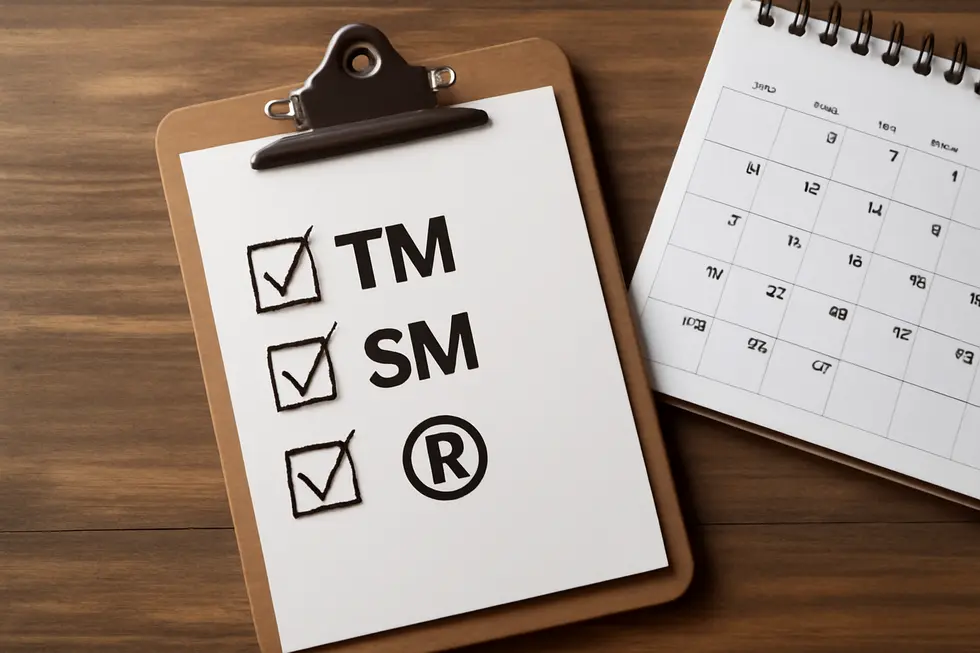
At the state level, businesses typically use the “TM” symbol to indicate an unregistered trademark or a mark registered only within a single state jurisdiction. This symbol signals a claim on the trademark specific to that locale but offers limited legal reinforcement beyond. Service marks used in services rather than products may be denoted by “SM” under state registration to communicate their nature. However, neither “TM” nor “SM” require formal registration and are commonly used while an application is pending or for unregistered marks to assert rights under common law.
Federal trademark registration, granted by the United States Patent and Trademark Office (USPTO), enables use of the ® symbol exclusively. This symbol conveys that the mark is federally registered and enjoys nationwide protection. Displaying the ® symbol notifies competitors and consumers that the trademark owner holds exclusive rights enforceable in federal courts across all states. Misusing the ® symbol without a valid federal registration can lead to legal consequences, including penalties and loss of credibility.
The choice between state and federal registration thus impacts not only legal protection but also how a business can publicly assert its trademark rights. While state trademarks offer affordable, localized branding safeguards, only federal registrations provide the authoritative ® symbol and the comprehensive, enforceable rights it represents. Proper use of these symbols aligns with a company’s business size, geographic reach, and expansion plans, making the trademark’s legal footprint clearer to the market and courts alike.
For businesses seeking a deeper understanding of trademark protection nuances, exploring trademark protection for business names and logos can offer valuable insights.
3. Navigating Enforcement and Legal Risks: Consequences of Maintenance Failures in State and Federal Trademark Registrations
Enforcement strength and legal consequences diverge significantly between state and federal trademark registrations, largely hinging on maintenance compliance. Federal trademarks, backed by the U.S. Patent and Trademark Office (USPTO), grant owners the ability to enforce rights nationwide through federal courts, offering powerful remedies like injunctions, monetary damages, and destruction of counterfeit goods. This nationwide coverage is further reinforced by a legal presumption of ownership and a shifted burden of proof onto infringers, promoting more effective and streamlined enforcement.
Conversely, state trademarks limit protection and enforcement strictly within their jurisdiction, relying on state courts and offering a narrower scope of remedies. While state registrations fit businesses confined to local markets, their enforcement options pale in comparison to federal rights.
A critical aspect often overlooked is the maintenance of trademark registrations. Federal registrations mandate strict upkeep, requiring a Declaration of Continued Use filed between the fifth and sixth year after registration, along with renewal filings every ten years accompanied by proof the trademark remains active in commerce. Neglecting these deadlines leads to automatic cancellation, extinguishing federal protection nationwide—even if the mark is still in use. The USPTO and courts may deem marks abandoned for as little as two to three years of non-use or lack of enforcement against infringers, undermining the registrant’s rights and market position.
State trademark maintenance requirements vary but are generally less stringent. Failure to renew results in loss of protection solely within that state’s borders without wider legal repercussions. However, relying exclusively on state registration or common law rights can expose businesses to risks if a competitor secures a conflicting federal registration.
Understanding these enforcement distinctions and diligent maintenance is essential for sustaining robust trademark protection. For business owners seeking comprehensive guidance on federal maintenance and enforcement requirements, exploring detailed resources such as the trademark protection for business names and logos can provide invaluable insights.
Final thoughts
In summary, understanding the key differences between state and federal trademarks is essential for any business owner. Whether you are a small local bakery or an expansive e-commerce platform, the choice of trademark registration will have lasting implications for your brand’s protection. By evaluating your business’s reach, legal needs, and future growth, you can make a well-informed decision that secures your intellectual property effectively.
Your IP is the foundation of your success – let’s protect it together before it’s too late. We can’t wait to help you turn your ideas into legally secured assets.
About us
undefined