
Introduction
Intellectual property rights govern how businesses protect innovations, brands, and confidential knowledge that drive growth. Patents shield new inventions and practical designs, trademarks preserve brand identities, copyrights guard original expressions, and trade secrets protect secret formulas and processes. For a business owner, understanding these tools is not a theory but a practical strategic play: choose the right protection, balance cost and speed, monitor the competitive landscape, and prepare enforcement plans before an infringement occurs. This article maps six critical areas of IP law with concrete examples, real-world cases, and practical takeaways you can apply today. Each chapter builds on the last—starting with patents and product features, moving through branding and online presence, then to the protection of creative works, sensitive data, aesthetic designs, and finally the geopolitical context in which enforcement happens. By linking the types of protection to everyday business decisions—whether you’re launching a new product, securing a brand, or safeguarding trade intelligence—this guide helps owners spot gaps, prioritize resources, and avoid costly disputes. Together, the chapters illuminate how IP rights intersect with product strategy, marketing, operations, and risk management.
Tables of Contents
Chapter 1: Patents and the Innovation Engine: Types, Inventions, and Notable Case Studies
- Intellectual Property Law Examples in Patents: Types, Inventions, and Notable Case Studies — Technological Dimensions: Impact on Innovation, Standards, and Patentable Subject Matter
- Economic Implications of Patents: Licensing, Valuation, and Monopoly Effects
- Intellectual Property Law Examples in Patents: Types, Inventions, and Notable Case Studies — Geopolitical Considerations: Cross-Border Enforcement, Trade Agreements, and Strategic Patent Portfolios
- Societal Impacts: Access to Medicines, Public Health, and Innovation Equity
- Historical Case Studies and Precedents that Shaped Patent Law—From Foundational Decisions to Modern Implications
Chapter 2: Intellectual Property Law Examples in Trademarks: Brand Names, Logos, and Domain Name Issues
- Intellectual Property Law Examples in Trademarks: Brand Names, Logos, and Domain Name Issues — Navigating Digital Platforms, AI-Generated Content, and Trademark Use in the Technological Dimension
- Intellectual Property Law Examples in Trademarks: Brand Names, Logos, and Domain Name Issues — Economic Impacts: Brand Equity, Market Valuation, and Domain Name Trading
- Intellectual Property Law Examples in Trademarks: Brand Names, Logos, and Domain Name Issues — Geopolitical Regulation: Cross-Border IP Enforcement and Trade Policy
- Intellectual Property Law Examples in Trademarks: Brand Names, Logos, and Domain Name Issues — Societal Implications: Consumer Trust, Brand Identity, and Cultural Expression
- Trademark Turbulence in Cyberspace: Dilution, Cybersquatting, and Domain Disputes in the Brand Arena
Chapter 3: Intellectual Property Law Examples in Copyrights: Original Works, Registration, and Enforcement
- Intellectual Property Law Examples in Copyrights: Original Works, Registration, and Enforcement — The Technological Dimensions of Digital Creation and AI’s Role
- Intellectual Property Law Examples in Copyrights: Original Works, Registration, and Enforcement — Economic Implications for Original Works, Registration, and Enforcement in Creative Markets
- Intellectual Property Law Examples in Copyrights: Original Works, Registration, and Enforcement — Geopolitical Considerations in Cross-Border Registration and Enforcement of Copyrights
- Intellectual Property Law Examples in Copyrights: Original Works, Registration, and Enforcement — Societal Impacts on Access, Education, and Cultural Preservation through Original Works and Registration
- Intellectual Property Law Examples in Copyrights: Original Works, Registration, and Enforcement — Enforcement Mechanisms, Legal Trends, and Policy Developments for Original Works Protection
Chapter 4: Trade Secret Law as a Catalyst in the Intellectual Property Ecosystem
- Trade Secrets in the Digital Era: Confidential Information, Security Protocols, and Legal Standards — Technological Dimensions of Protection
- Intellectual Property Law Examples in Trade Secrets: Confidential Information, Security Measures, and Legal Standards — Economic Implications and Valuation of Confidential Information
- Intellectual Property Law Examples in Trade Secrets: Confidential Information, Security Measures, and Legal Standards — Geopolitical Considerations in Cross-Border Trade Secret Enforcement
- Intellectual Property Law Examples in Trade Secrets: Confidential Information, Security Measures, and Legal Standards — Societal and Ethical Impacts of Confidential Information Security
- Trade Secrets in Practice: Legal Standards, Enforcement, and Compliance for Confidential Information
Chapter 5: Intellectual Property Law Examples in Industrial Designs: Aesthetics, Design Rights, and Cross-Border Issues
- Designs in the Tech Era: How Innovation Shapes Aesthetics, Rights, and Global Enforcement
- Economic Implications of Intellectual Property Law Examples in Industrial Designs: Aesthetics, Design Rights, and Cross-Border Issues
- Geopolitical and Regulatory Frameworks in Intellectual Property Law Examples in Industrial Designs: Aesthetics, Design Rights, and Cross-Border Issues
- Societal and Cultural Dimensions of Industrial Designs: Aesthetics, Design Rights, and Cross-Border Tensions
- Enforcement, Litigation, and Cross-Border Cooperation in Intellectual Property Law Examples in Industrial Designs: Aesthetics, Design Rights, and Cross-Border Issues
Chapter 6: Intellectual Property Law: Global Enforcement, Geopolitics, and Societal Consequences
- Cross-Border Strategies in SEP Litigation: FRAND, Venue, and Enforcement Demands
- Economic Incentives, Access, and Market Structures: How Global IP Enforcement Reconfigures Innovation and Inclusion
- Intellectual Property Law Examples in Global Enforcements, Geopolitics, and Societal Implications of IP Law: Geopolitical Frictions, Governance, and Cross-Border Litigation
- Societal Implications for Innovation, Culture, and Public Policy: Balancing Incentives, Access, and Cultural Commons
- null
Chapter 1: Patents and the Innovation Engine: Types, Inventions, and Notable Case Studies

1. Intellectual Property Law Examples in Patents: Types, Inventions, and Notable Case Studies — Technological Dimensions: Impact on Innovation, Standards, and Patentable Subject Matter
Patents operate at the intersection of inventive spark and practical application. US law classifies patents into utility, design, and plant. Utility patents secure new devices, processes, and materials, requiring usefulness, novelty, and non-obviousness; design patents safeguard ornamental shapes and appearances, leaving function untouched; plant patents reward asexually reproduced varieties. Patentable subject matter spans four categories—processes, machines, manufactures, and compositions of matter—yet abstract ideas remain excluded unless framed through a real-world use or transformative step, often evaluated by the machine-or-transformation test. This boundary guides investment decisions, since technologies like AI-enabled hardware or biotechnology must demonstrate concrete improvements or integrations. Notable cases illuminate enforcement boundaries without naming specific brands: the evolution from early mechanical patents to modern software-linked inventions shows how the era’s standards adapt to new tech. For readers considering licensing or valuation questions, a fundamental query arises: can you patent a word? Can you patent a word? The answer hinges on practical application.
2. Economic Implications of Patents: Licensing, Valuation, and Monopoly Effects
Patents confer temporary, exclusive rights to inventions, but their real economic force emerges in how licensing, valuation, and market power reshape innovation. Firms deploy exclusive licenses to harvest high royalties from leading technologies, while non-exclusive licenses widen diffusion and competition. Cross-licensing and patent pools can reduce transaction costs in dense tech landscapes, though they raise concerns about royalty stacking and bargaining leverage. Valuation relies on income-based methods, relief-from-royalty benchmarks, and dynamic models that reflect development milestones and regulatory risk. FRAND commitments for standards-essential patents illustrate the delicate balance between access and investment incentives. The economics of patents also expose a tension between monopoly power and dynamic efficiency: clusters of overlapping rights can raise prices and deter entry, whereas well-structured licensing accelerates market adoption. Boundaries of patentable subject matter matter too— even questions like whether a word can be patented illuminate how scope shapes value [Can you patent a word].
3. Intellectual Property Law Examples in Patents: Types, Inventions, and Notable Case Studies — Geopolitical Considerations: Cross-Border Enforcement, Trade Agreements, and Strategic Patent Portfolios
Geopolitical currents shape patent strategy as surely as invention shapes markets. Cross-border enforcement demands portfolios deliver consistent rights across jurisdictions while respecting local remedies and competition rules. In practice, firms balance injunction potential, damages expectations, and parallel litigation risks when entering markets with divergent standards for novelty, inventive step, and claim interpretation. Trade agreements and international bodies set the floor for protection while leaving room for national policy tools, regulating patent term extensions, data exclusivity, and regulatory data protection in pharma and tech. FRAND commitments for standard-essential patents illustrate how licensing must navigate both technical access and economic fairness across borders. Strategically, portfolios are built to withstand geopolitical pressure: diversified geographies, careful maintenance timing, and robust freedom-to-operate analyses. The geopolitical lens reorients incentives toward licensing leverage, collaboration, and resilience, ensuring that patent rights underpin innovation without becoming a barrier to global deployment.
4. Societal Impacts: Access to Medicines, Public Health, and Innovation Equity
Patent law drives medicine and tech breakthroughs, yet its societal reach is double-edged. Utility patents incentivize R&D for drugs, vaccines, and medical devices, offering hope for cures while often raising prices that curb access in lower-income regions. Design and plant patents shape aesthetics and agricultural innovation, but the core public health concern remains: how to sustain invention without denying essential therapies. Cross-border enforcement, licensing practices, and trade agreements further modulate who benefits from innovations, especially during health crises. The doctrine of equivalents safeguards genuine invention from minor tweaks, balancing protection with ongoing competition that fuels subsequent research. To advance innovation equity, policy levers—voluntary licenses, technology transfer, and tiered pricing—aim to expand access while preserving incentives for future breakthroughs. See Categories of Intellectual Property Rights for broader context within the IP landscape.
5. Historical Case Studies and Precedents that Shaped Patent Law—From Foundational Decisions to Modern Implications
Historical case studies mark turning points where patent law shifted from protecting ideas to concrete applications. O’Reilly v. Morse warned against broad claims reaching beyond invention, a thread carried into the nonobviousness standard from Graham v. John Deere. That framework requires a real inventive step and consideration of prior art. Diamond v. Chakrabarty opened the door to patents on engineered organisms, showing human-made improvements can qualify when they transcend nature. The line between abstract ideas and patentable methods sharpened in Diamond v. Diehr and later refined by Alice Corp. v. CLS Bank, which requires an inventive concept beyond abstract steps. In KSR v. Teleflex, courts adopted a common-sense view of obviousness, avoiding hindsight. These precedents shape eligibility tests and claim drafting, tethering invention to practical, demonstrable usefulness. For a related question on patentable subject matter, see Can you patent a word?.
Chapter 2: Intellectual Property Law Examples in Trademarks: Brand Names, Logos, and Domain Name Issues
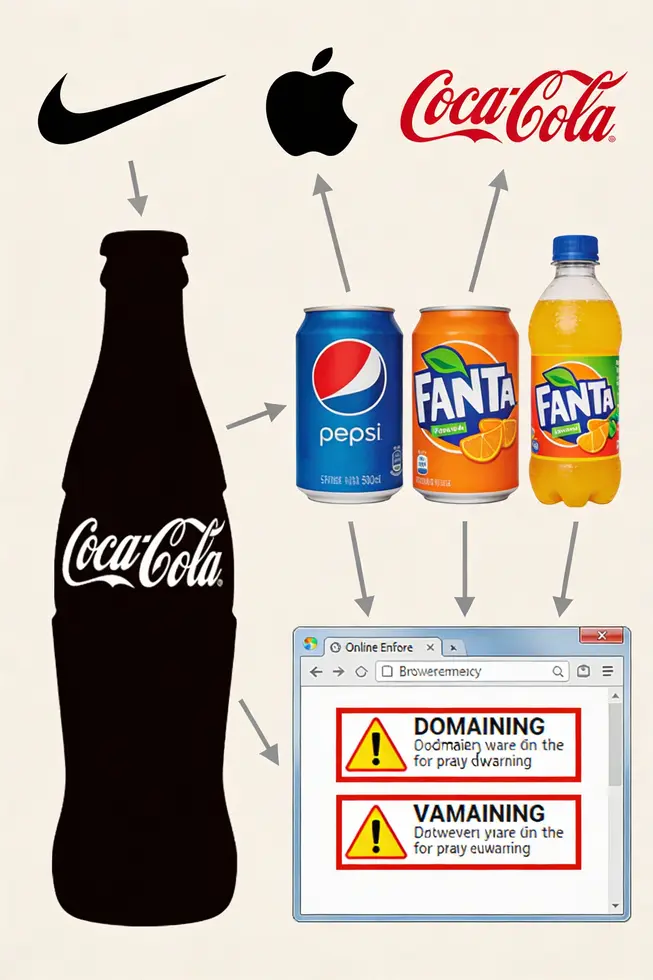
1. Intellectual Property Law Examples in Trademarks: Brand Names, Logos, and Domain Name Issues — Navigating Digital Platforms, AI-Generated Content, and Trademark Use in the Technological Dimension
Digital platforms extend a mark’s reach while complicating enforcement. Under the Lanham Act, trademarks protect distinctive identifiers used online—websites, apps, and digital storefronts—from confusingly similar uses. Registration with the USPTO yields stronger nationwide rights; unregistered marks gain protection if used in interstate commerce. Owning a domain or forming an entity does not guarantee brand control; rights depend on actual use and the likelihood of confusion with others’ marks. Thorough clearance searches—federal registrations, state records, common-law uses, and domains—help prevent disputes. In the tech dimension, AI-generated logos test traditional criteria of distinctiveness and ownership. While AI can aid design, liability and rights hinge on whether the result is non-descriptive, non-functional, and capable of source identification. Platform policies and takedown procedures shape practical protection online. For a concise overview, see trademark protection resources: trademark-protection-business-name-logo/.
2. Intellectual Property Law Examples in Trademarks: Brand Names, Logos, and Domain Name Issues — Economic Impacts: Brand Equity, Market Valuation, and Domain Name Trading
Trademarks protect brand names, logos, and slogans by creating distinct identities that help consumers distinguish products and services. When a mark earns recognition, it grows brand equity—the premium consumers are willing to pay, and the loyalty that sustains margins even amid competition. This is the core reason strong marks command market valuation beyond unit sales, since the rights restrict others from using confusingly similar identifiers. Logos play a pivotal role by signaling consistency and quality at a glance, while domain names that echo protected marks act as important digital real estate, amplifying reach but also inviting enforcement challenges. Companies must actively defend non-use risks, as gaps can lead to cancellation and erosion of value, or costly cybersquatting disputes. For a practical overview of trademark protection strategies in this space, see Trademark Protection: Business Names and Logos. In cross-border commerce, clearances and consistent policing remain essential to sustain premium pricing and investor confidence.
3. Intellectual Property Law Examples in Trademarks: Brand Names, Logos, and Domain Name Issues — Geopolitical Regulation: Cross-Border IP Enforcement and Trade Policy
Trademarks anchor a brand’s identity across borders, and the geopolitics of enforcement shapes how that identity travels. At heart, trademark law guards source and quality, protecting distinct branding assets through a spectrum of marks: word marks, device marks, combination marks, shape marks, sound marks, and service or certification marks. Because brands operate globally, owners often register multiple forms to lock in protection as markets diverge. Domain names add a digital layer, where cybersquatting and conflicting registrations test both local rules and international regimes; dispute mechanisms like a domain-name policy and international treaties play pivotal roles, but outcomes hinge on where protection is sought and how use is demonstrated. For practitioners and policymakers, harmonization efforts aim to reduce frictions while preserving robust remedies against infringement, counterfeiting, and bad-faith registrations. For readers seeking practical guidance, see trademark-protection-business-name-logo for cross-border branding strategy.
4. Intellectual Property Law Examples in Trademarks: Brand Names, Logos, and Domain Name Issues — Societal Implications: Consumer Trust, Brand Identity, and Cultural Expression
Trademarks protect the signals that connect a business with its customers—brand names, logos, slogans, and even distinctive product shapes—by blocking others from using confusingly similar identifiers in commerce. Rights arise as soon as a mark is used in commerce under common law, and federal protection follows registration, which also yields clearer nationwide enforcement. Word marks and logos are the most recognizable, but courts also recognize non-traditional signs—sounds, colors, shapes, and even scents in right contexts—that convey origin and quality. Protection helps customers navigate choices and rewards consistent experiences, while registration provides exclusive rights and stronger leverage against imitators. Domain-name disputes add another layer: cybersquatting and confusing registrants threaten brand continuity online, which the law seeks to deter. Registration costs per class are a practical consideration for brands building assets. For practical guidance, see trademark protection for business names and logos. Trademark law must balance owner rights with culture, public interest, and the evolving signals of identity.
5. Trademark Turbulence in Cyberspace: Dilution, Cybersquatting, and Domain Disputes in the Brand Arena
Brand identity rests on recognizable names, logos, and signals of origin. Trademark law guards these signals to protect brand integrity and avoid consumer confusion. Dilution shields famous marks from uses that blur or tarnish their distinctiveness, even when no direct confusion exists. Cybersquatting turns domains into battlegrounds, with bad-faith registrations aimed at profiting from goodwill. Domain disputes use fast tracks like UDRP to transfer or cancel infringing domains. The core tools are the Lanham Act for infringement and dilution, plus cyber-focused provisions such as the ACPA. Courts and panels weigh fame, intent, and potential confusion when deciding cases. For brand managers, a proactive approach matters: register core marks, monitor domain spaces, and pursue UDRP or ACPA actions when warranted. This approach anchors the strategy in practical protection for brand names and logos. For a concrete checklist, see Trademark protection for business names and logos.
Chapter 3: Intellectual Property Law Examples in Copyrights: Original Works, Registration, and Enforcement

1. Intellectual Property Law Examples in Copyrights: Original Works, Registration, and Enforcement — The Technological Dimensions of Digital Creation and AI’s Role
Digital creation disrupts traditional boundaries of authorship. U.S. copyright protects original works fixed in a tangible medium, with protection arising automatically but registration offering stronger remedies. In the digital realm, the line between human authorship and AI assistance becomes central. Pure AI outputs often lack the required human spark of originality, while works shaped by meaningful human input can qualify as protectable, provided the human contribution dominates the creative process. Training data used for AI raises new questions about infringement and the need for transparency in data provenance. For enforcement, creators rely on metadata, watermarks, and fingerprinting to prove copying, alongside DMCA takedown procedures that platforms must honor. Registration remains strategically valuable: it yields prima facie ownership, potential statutory damages, and easier licensing. Creators should document dates, drafts, and edits to substantiate originality and authorship. For platforms, clarity about AI involvement improves risk management. copyright-definition-computer.
2. Intellectual Property Law Examples in Copyrights: Original Works, Registration, and Enforcement — Economic Implications for Original Works, Registration, and Enforcement in Creative Markets
Copyright protects original works fixed in a tangible medium and requires independent creation by a human author with creativity, not novelty. Original works include literature, music, art, software, and film; ideas or facts and simple symbols are not protected. Ownership vests automatically at creation, though exceptions exist for joint works, works-for-hire, or assignments. Registration is optional but offers benefits: prima facie evidence of ownership, eligibility for statutory damages, and the ability to sue. Protection is not indefinite; works enter the public domain, expanding access and licensing opportunities. Enforcement hinges on proving copying of protectable expression; remedies include injunctions, damages, and attorney fees. Economically, copyright incentives spur investment in originals, enabling monetization through licensing and exclusive rights. But costs of litigation and the risk of orphan works can deter some creators, making a balanced regime essential for vibrant creative markets. copyright-definition-economics-business
3. Intellectual Property Law Examples in Copyrights: Original Works, Registration, and Enforcement — Geopolitical Considerations in Cross-Border Registration and Enforcement of Copyrights
Copyright law protects original works fixed in a tangible medium, granting exclusive rights to reproduce, distribute, perform, and adapt. Yet, when works cross borders, geopolitical realities shape protection. The Berne Convention automates protection across member states, reducing the need for registration abroad, while each country still applies its own term lengths and limitations. In the United States, post-1978 works enjoy life of the author plus 70 years, with pre-1927 works in the public domain; foreign unpublished works may be treated differently, and restoration under URAA reclaims protections for some older works. Registration is not required for protection but provides prima facie evidence and enables statutory damages. This cross-border landscape creates practical challenges for rights holders and users, particularly with orphan works and divergent fair-use norms. For a concise primer on how public-domain status interacts with cross-border protection, see copyright law and public domain.
4. Intellectual Property Law Examples in Copyrights: Original Works, Registration, and Enforcement — Societal Impacts on Access, Education, and Cultural Preservation through Original Works and Registration
Copyrights protect original works fixed in a tangible form, safeguarding expression while enabling public access. Original works require more than a novel idea; they need a spark of creativity. Protection applies automatically, but registration with the U.S. Copyright Office strengthens enforcement by providing prima facie ownership evidence and enabling statutory damages and attorney fees. This support matters for classrooms, libraries, and archives seeking remedies. The tension between incentive and access arises through fair use, educational exemptions, and the public domain. When works enter the public domain, educators and researchers can copy, adapt, and preserve without permission, expanding cultural transmission and learning. For context on books, see copyright information for books. Yet orphan works and incomplete registration create gaps in access, especially for marginalized creators. A careful balance—preservation, access, and reasonable enforcement—keeps copyright both a driver of creativity and a steward of culture.
5. Intellectual Property Law Examples in Copyrights: Original Works, Registration, and Enforcement — Enforcement Mechanisms, Legal Trends, and Policy Developments for Original Works Protection
Copyright enforcement for original works in the United States rests on civil actions in federal courts, with injunctions, damages, and, where warranted, criminal prosecutions for willful infringement. Registration remains a prerequisite to remedies, tying the right to sue to a recorded work and enabling pre-trial relief. Enforcement tools extend beyond lawsuits: DMCA takedown notices allow swift removal of infringing content, while seizures and enhanced damages target egregious activity. Agencies like customs authorities support border enforcement, and digital-forensic tools aid proof of infringement. Recent trends seek to balance IP rights with free expression and platform responsibility as AI-generated content raises ownership questions. Policy developments in 2025 emphasize AI training data transparency and anti-piracy measures, including proposed platform-liability schemes and court-ordered blocks on infringing sites. For practical guidance, see Copyright information for businesses. This resource helps owners tailor enforcement to their needs.
Chapter 4: Trade Secret Law as a Catalyst in the Intellectual Property Ecosystem

1. Trade Secrets in the Digital Era: Confidential Information, Security Protocols, and Legal Standards — Technological Dimensions of Protection
Trade secrets protect confidential information that confers economic value when kept secret and supported by reasonable security measures. In technology and AI, this includes non-public formulas, datasets, and the weights and architecture of models that yield competitive edges. Unlike patents, trade secrets can last indefinitely if secrecy is preserved, a property that makes them attractive for evolving tech assets. The protection relies on NDAs, access controls, labeling, and training; lax protection can erase protection if information leaks.
In practice, examples take the form of a beverage flavor formula and a spice blend kept in vaults and restricted digital access. For AI, confidential data and training parameters can qualify as trade secrets when kept secret and used to derive performance advantages.
On the legal side, misappropriation must occur through improper means, and remedies range from injunctions to damages, with some jurisdictions imposing criminal penalties. For a broader map of these protections, see categories of intellectual property rights.
2. Intellectual Property Law Examples in Trade Secrets: Confidential Information, Security Measures, and Legal Standards — Economic Implications and Valuation of Confidential Information
Trade secrets secure confidential information that derives economic value from secrecy and is protected only as long as it remains secret. These may include formulas, patterns, processes, customer lists, pricing strategies, data structures, and even software algorithms kept confidential. In the food and beverage sector, recipes and production methods illustrate how secrecy can sustain competitive advantages; in technology, proprietary algorithms likewise endure performance gains. Courts require ‘reasonable measures’ to preserve secrecy, such as compartmentalization, access controls, NDAs, supplier audits, and confidentiality clauses. The misappropriation standard rests on three elements—secret, commercial value from secrecy, and reasonable security—while improper means, not independent discovery, trigger liability. Remedies include injunctions, damages, and, in some jurisdictions, criminal penalties. Unlike patents, trade secrets can endure indefinitely if secrecy holds, shaping corporate strategy around perpetual competitive edges and prudent risk management against reverse engineering company intellectual property protection.
3. Intellectual Property Law Examples in Trade Secrets: Confidential Information, Security Measures, and Legal Standards — Geopolitical Considerations in Cross-Border Trade Secret Enforcement
Trade secrets rely on secrecy, not registration. Across borders, what counts as secret and how it is protected differ, shaping corporate risk and strategy. At a domestic level, the key elements remain economic value from secrecy, reasonable protective measures, and clear governance. In cross-border situations, secrecy standards and enforcement procedures vary by jurisdiction, making a unified strategy essential. Companies should map information by category—technical know-how, datasets, and commercial methods—and implement technical controls (encryption, access controls), organizational policies (need-to-know, incident response), and contractual safeguards (NDAs, vendor agreements). Documentation, such as a master inventory and ownership assignments, supports defensible secrecy. When misappropriation occurs abroad, remedies depend on local civil or criminal regimes, with tools like injunctions and damages, though cross-border relief may require treaties and cooperation channels. For practitioners, a proactive risk assessment, precise confidentiality agreements, and ongoing training are vital. See IP rights categories for broader context IP Rights Categories.
4. Intellectual Property Law Examples in Trade Secrets: Confidential Information, Security Measures, and Legal Standards — Societal and Ethical Impacts of Confidential Information Security
Trade secrets protect confidential know-how that yields economic value precisely because it remains hidden. The law frames confidentiality through two lenses: the material itself and the security practices that shield it. Across the United States and Europe, courts assess whether organizations have taken reasonable steps—such as access controls, encryption, non-disclosure agreements, and careful vendor management—to keep information secret. The Defend Trade Secrets Act and comparable UTSA provisions create a practical, modern enforcement regime, while cross-border regimes demand harmonized but flexible standards. Yet the societal and ethical dimensions extend beyond litigation: overly aggressive secrecy can hinder knowledge sharing, whistleblowing, and public safety research, raise privacy concerns, and burden small firms. Thus, governance must balance incentives for innovation with openness and accountability. By aligning security with ethical norms, organizations build trust and long-term value. See guidance at company-intellectual-property-protection.
5. Trade Secrets in Practice: Legal Standards, Enforcement, and Compliance for Confidential Information
Within the realm of trade secrets, organizations distinguish confidential information from protected trade secrets. Confidential information may hold value from secrecy without meeting the stricter criteria, which require secrecy and an economic advantage. The protections hinge on reasonable measures—context-specific safeguards weighed against practicality. Security controls such as access restrictions, strong authentication, encryption, data classification, and vendor management are evaluated against real-world needs.
U.S. enforcement blends state and federal tools. UTSA provides civil remedies; the Defend Trade Secrets Act offers a federal path for cross-jurisdictional cases. The Economic Espionage Act criminalizes willful misappropriation for economic gain, and extraordinary seizures may be allowed in exceptional circumstances, with strict procedures.
For organizations, a robust compliance framework matters: inventory and classify assets, enforce NDAs and invention assignments, implement incident response, and monitor third-party risk. See Categories Intellectual Property Rights for broader context.
Chapter 5: Intellectual Property Law Examples in Industrial Designs: Aesthetics, Design Rights, and Cross-Border Issues

1. Designs in the Tech Era: How Innovation Shapes Aesthetics, Rights, and Global Enforcement
Industrial design rights guard the distinctive look of products, from shapes to colors and textures, creating market appeal while facing imitation across borders. As digital channels expand, designers must navigate a landscape where protection terms converge and diverge. A EU ruling clarified that copyright and design protection can overlap for applied art, allowing a single object to enjoy dual protection when appropriate. This convergence invites designers to synchronize strategies for design registrations and copyrights, maximizing coverage across jurisdictions. Mercosur–EFTA pact aligns protection terms at 25 years in Brazil and EFTA states, with shorter terms in other Mercosur members, and permits narrower protection for repair components to balance supply chains. Cross-border enforcement has become more practical through customs regimes and centralized filing systems like Madrid; however, enforcement remains national by design. For global portfolios, licensing, joint ventures, and audit provisions are essential to curb misuses. See cross-border IP enforcement under international treaties.
2. Economic Implications of Intellectual Property Law Examples in Industrial Designs: Aesthetics, Design Rights, and Cross-Border Issues
Industrial design rights grant a temporary, protected window during which a product’s visual identity can command a premium. This economic logic underpins firms’ willingness to invest in shape, ornamentation, and surface details that differentiate offerings in crowded markets. When designers can monetize appearances through registration, licensing, and cross-border sales, firms expand R&D budgets, seek strategic partnerships, and rely less on price competition. Yet the global reach of design protection hinges on harmonized frameworks that reduce costs and uncertainty. The Hague System, EU registrations and regional accords shape how firms spread protection across markets, while costs and timing drive selective designation. The ability to file many designs at once lowers overhead, enabling portfolios that cover core lines and adjacent variants. However, enforcement remains uneven across borders, with injunctions and border measures shaping incentives to innovate and deter imitators. Firms navigate a balancing act between broad geographic protection and sustainable, cost-efficient commercialization. Hague System guide (WIPO).
3. Geopolitical and Regulatory Frameworks in Intellectual Property Law Examples in Industrial Designs: Aesthetics, Design Rights, and Cross-Border Issues
Design protection sits at a geopolitical crossroads, where national incentives, regional blocs, and global trade rules shape what can be protected, for how long, and where enforcement happens. The Hague System offers a streamlined path, yet each jurisdiction still interprets registrability and scope through its own lens—3D shapes may be protected in EU design rights, while in the US design patents emphasize ornamental features tied to function. Cross-border enforcement relies on border measures, mutual recognition, and cooperation against counterfeits in a highly interconnected supply chain. Trade policy and security concerns drive selective protection, affecting export controls on dual-use designs or sensitive aesthetics. As AI-assisted design challenges authorship, jurisdictions differ on ownership, licensing, and infringement standards, complicating portfolios. For practitioners, aligning design protection with branding, licensing, and enforcement is essential across markets; see the overview in Categories of Intellectual Property Rights.
4. Societal and Cultural Dimensions of Industrial Designs: Aesthetics, Design Rights, and Cross-Border Tensions
Design protection sits at the crossroads of culture, commerce, and daily life. Industrial designs convey more than form; they carry social meanings—regional aesthetics, fashion trends, and shared visual languages that shape how people perceive objects. Because design rights vary by jurisdiction, societies encode different balances between protecting appearance and preserving public creativity. Registered and unregistered regimes, plus trade dress and copyright overlays, influence who can contribute to a visual language across markets and platforms, especially as goods cross borders online. Cross-border differences complicate enforcement when a design appears in several countries with divergent standards for ornamentation and functionality. The rise of digital marketplaces intensifies concerns about misappropriation and access, while also offering avenues for cultural exchange and licensing. Ethically, policymakers must weigh incentives for designers against the public interest in affordable, diverse aesthetics and the preservation of traditional motifs. For framing, see Categories of Intellectual Property Rights.
5. Enforcement, Litigation, and Cross-Border Cooperation in Intellectual Property Law Examples in Industrial Designs: Aesthetics, Design Rights, and Cross-Border Issues
Enforcement of industrial design rights turns on distinguishing non-functional, distinctive aesthetics that signal source rather than function. Litigation typically follows cease-and-desist letters, federal complaints, defenses such as invalidity, and remedies ranging from injunctions to damages. Courts test whether a design is sufficiently distinctive and secondary meaning has formed, particularly after a patent expires. In high-profile clashes over visual appearances, judges have denied protection for functional combinations while rewarding brands whose trade dress or design patents convincingly identify the source. Cross-border disputes reveal the friction of divergent regimes: parallel proceedings across jurisdictions, varied standards for originality, and different scopes of protection. Cooperative strategies—monitoring for infringements, pursuing harmonized filings, and leveraging bodies like the EUIPO and WIPO—offer pathways to enforce rights abroad. These dynamics underscore the need for global enforcement strategies and careful risk assessment for designers. For readers seeking deeper context, see categories of intellectual property rights.
Chapter 6: Intellectual Property Law: Global Enforcement, Geopolitics, and Societal Consequences

1. Cross-Border Strategies in SEP Litigation: FRAND, Venue, and Enforcement Demands
Global IP enforcement now unfolds across borders, driven by standards, licenses, and strategic choices. In disputes over standard-essential patents, licensors and implementers navigate a geopolitical landscape where the forum can determine leverage, royalties, and access to widely used technologies. Courts in several jurisdictions may grant or withhold injunctions, and parties often deploy anti-suit measures to influence outcomes in other countries, highlighting how venue and procedure can become central to technical disputes. This dynamic pressures licensors to seek predictable FRAND-based licensing while challengers push for balanced terms to avoid excessive costs or misuse of the system. EU-wide patent protection schemes show how cross-border enforcement can be coordinated, yet remain fragile when validity questions arise in some venues. The WTO TRIPS framework offers guardrails, calling for respect of foreign enforcement while acknowledging the need for timely remedies. For broader background on IP categories, see Categories Intellectual Property Rights.
2. Economic Incentives, Access, and Market Structures: How Global IP Enforcement Reconfigures Innovation and Inclusion
Global IP enforcement reshapes the economic incentives that drive invention, production, and access. Cross‑border injunctions, FRAND determinations, and damages rules push firms to weigh legal risk alongside market structure. A firm SEP regime can reward genuine innovation, but high or uneven royalties may curb downstream adoption in lower‑income regions where access matters most. These dynamics influence licensing strategies, pushing portfolios to span multiple jurisdictions and encouraging product designs that balance performance with risk. Trademark and platform enforcement also bolster brand integrity, yet can raise barriers for smaller competitors and creators in crowded online markets. The resulting societal outcomes hinge on balancing protection with affordability, ensuring that incentives for invention do not extinguish broad access. Policy levers—careful harmonization, transparent licensing norms, and proportionate takedown regimes—shape long‑run innovation, competition, and consumer welfare. See Categories of Intellectual Property Rights Categories of Intellectual Property Rights.
3. Intellectual Property Law Examples in Global Enforcements, Geopolitics, and Societal Implications of IP Law: Geopolitical Frictions, Governance, and Cross-Border Litigation
Global IP enforcement sits at the intersection of law and power. High-stakes patent and design disputes reveal how nations protect technological advantages while safeguarding commerce. In design patent battles like Apple v. Samsung, courts carve out considerations of design, trade dress, and computed damages, shaping incentives for innovation. Beyond domestic courts, cross-border strategies redefine markets. The Nokia vs Oppo saga traces injunctions across Europe, provoking retaliatory suits and sparking debates over FRAND rates, venue shopping, and the reach of national courts. Jurisdictional frictions intensify as TRIPS norms clash with sovereignty, with arbitral findings challenging anti-suit injunction frameworks. Enforcement gaps in developing regions create fertile ground for counterfeit networks, while platforms deploy AI-driven takedowns to curb infringement at scale. Framing these tensions through the lens of categories of intellectual property rights underscores how patents, trademarks, copyrights, and trade secrets collectively govern global innovation and its governance.
4. Societal Implications for Innovation, Culture, and Public Policy: Balancing Incentives, Access, and Cultural Commons
Societal implications for innovation, culture, and public policy turn IP rules from dry law into social technology. Strong, well-targeted protections can mobilize resources for breakthrough work, yet overly broad or extended rights may constrain diffusion, raise costs, and entrench incumbents. Patents grant temporary monopolies that encourage investment but can delay downstream improvements; copyrights shape the public domain and education by controlling access to creative works; trademarks influence consumer trust and cultural symbolism; trade secrets reward secrecy and collaboration patterns across firms. In health and development, TRIPS flexibilities—like compulsory licensing and parallel importation—illustrate how policy can harmonize access with incentives. Global debates about AI-generated content and design rights test how far ownership should extend over non-human creativity. For brand protection and identity, see trademark-protection-business-name-logo. Aligning policy with public welfare means designing rights that foster open science, cultural participation, and affordable innovation.
5. null
null
Final thoughts
Across patents, trademarks, copyrights, trade secrets, and industrial designs, the practical takeaway for business owners is clear: map your protection to your value, monitor potential infringements, and prepare enforceable strategies before a dispute arises. The six chapters together form a roadmap from invention to enforcement, showing how choices in one area affect risk, cost, and growth. By prioritizing protection aligned with your business model—whether you’re bringing a new product to market, building a brand, or safeguarding confidential processes—you can unlock sustainable advantage while minimizing exposure to costly disputes.
Your IP is the foundation of your success – let’s protect it together before it’s too late. We can’t wait to help you turn your ideas into legally secured assets. Visit trademark2go.com to start protecting your IP today.
About us
At trademark2go.com, we’re your go-to partners for simplifying trademark, patent, and copyright registration. Our team of IP experts cuts through legal complexity, avoids common pitfalls, and delivers personalized guidance – whether you’re a startup, inventor, or creator. We prioritize your goals, turning your ideas into legally secured assets with clarity and care. Let’s protect what drives your success, together.