
Introduction
Copyright law is a critical pillar in protecting your business’s creative assets, helping secure exclusive rights over original works that drive success. For business owners, grasping the principles behind copyright ensures you leverage your intellectual property effectively while avoiding legal pitfalls. This foundational knowledge covers how copyright arises, what qualifies for protection, the exclusive rights granted to holders, and important limitations designed to balance innovation with public interest. Each chapter unpacks essential facets—from the basics of legal protection and criteria for eligibility, to the exclusive rights that protect your creations, the fair use exceptions that offer flexibility, and the evolving challenges posed by digital goods and resale rights. Together, these insights provide a comprehensive framework that empowers business owners to manage, protect, and maximize their intellectual assets confidently.
Tables of Contents
Chapter 1: Principles of Copyright: Fundamentals and Legal Protections
- The Role of Originality and Fixation in Securing Copyright Protection
- Balancing Exclusive Rights and Public Interests: Key Limits Within Copyright Protection
- Navigating Copyright Enforcement: Legal Mechanisms Protecting Creative Works
Chapter 2: Principles of Copyright: Criteria and Requirements for Protection
- How Originality and Fixation Shape Copyright Eligibility
- Balancing Creator Control and Public Interest: The Scope and Limits of Exclusive Copyright Rights
- Balancing Creator Rights and Public Interest: Fair Use and Key Exceptions in Copyright Law
Chapter 3: Principles of Copyright: Exclusive Rights of Copyright Holders
- Legal Foundations and the Comprehensive Scope of Exclusive Copyright Rights
- Exploring the Scope of Copyright Protection and the Exclusive Rights They Confer
- Balancing Creator Control and Public Access: Exceptions and Limitations to Copyright Exclusive Rights
Chapter 4: Principles of Copyright: Fair Use Doctrine and Limitations
- Balancing Creativity and Access: A Nuanced Exploration of the Four Fair Use Factors
- Balancing Fair Use with Market Realities and Contractual Boundaries
- Navigating Fair Use: Social, Technological, and Economic Dimensions in Copyright Law
Chapter 5: Principles of Copyright: First Sale Doctrine and Digital Challenges
- Navigating the First Sale Doctrine: Bridging Physical Ownership and Digital Licensing
- Reevaluating Ownership: How Digital Goods Disrupt the First Sale Doctrine and Consumer Rights
- Navigating the Economic and Social Implications of First Sale Doctrine Limits in Digital Media
Chapter 1: Principles of Copyright: Fundamentals and Legal Protections

1. The Role of Originality and Fixation in Securing Copyright Protection
At the heart of copyright law lie two essential conditions that determine whether a work qualifies for protection: originality and fixation. Originality requires that a work emerges from the independent creation of the author and contains at least a minimal degree of creativity. It does not demand novelty or uniqueness, but ensures the work reflects the author’s personal input rather than copying existing material. This standard, upheld internationally through conventions like the Berne Convention, protects a broad array of creative expressions—from complex novels to simple curated lists—so long as they bear the author’s creative imprint.
Complementing originality, fixation demands that the work be fixed in a tangible medium of expression. This means the creative idea must be recorded or embodied in a physical or digital form that can be perceived and reproduced. Whether in writing, sound recording, or digital file formats, fixation is necessary to anchor the creative expression and enable legal recognition. Importantly, copyright protection arises automatically upon fixation; formal registration is not required but can enhance the ability to enforce rights.
The combination of originality and fixation empowers creators with exclusive legal rights, including reproduction, distribution, public display, and creation of derivative works. These rights allow authors to control their creations and derive economic benefits. Understanding these foundational concepts is crucial when navigating copyright law, especially in light of modern challenges such as digital media and new technologies. For a comprehensive overview of copyright basics relevant to creators, see the detailed guidance available on copyright information for books.
2. Balancing Exclusive Rights and Public Interests: Key Limits Within Copyright Protection
Copyright law grants creators exclusive rights that empower them to control how their original works are used. These fundamental rights include reproducing the work, distributing copies, publicly performing or displaying it, and creating adaptations. Once a work is fixed in a tangible form and meets the originality requirement, these rights vest automatically. However, to maintain a fair balance between protecting creators and serving the public good, the law imposes critical limitations.
The fair use doctrine stands as the cornerstone of these boundaries, permitting certain uses without permission for purposes such as criticism, education, news, and parody. This flexible principle weighs factors including the purpose of the use and its effect on market value, ensuring that limited, transformative uses can coexist with copyright protection. Additionally, the first sale doctrine allows legal owners of physical copies to resell or lend them freely, though applying this to digital goods remains complex.
Another vital limitation is the exclusion of ideas, facts, and methods from protection; only the particular expression of ideas qualifies for copyright. Compulsory licenses also regulate specific uses, letting others use works under prescribed conditions and royalty payments without direct authorization.
Together, these exceptions and rights foster an ecosystem where creators maintain control and economic benefits while preserving space for creativity, education, and access. For a deeper overview, explore detailed insights on copyright distribution rights.
3. Navigating Copyright Enforcement: Legal Mechanisms Protecting Creative Works
Copyright law empowers creators through automatic legal protections the moment their original works are fixed in a tangible medium. These exclusive rights include reproduction, distribution, public performance, public display, and the right to make derivative works. Although registration is not mandatory, it enhances enforcement capabilities by providing stronger evidence in infringement disputes and the possibility of statutory damages.
Enforcement hinges on the ability of copyright owners to take legal action against unauthorized use. Remedies such as injunctions and monetary damages help deter infringement and compensate creators. However, the law balances this against public interests through doctrines like fair use, which permit limited, transformative uses for criticism, commentary, education, and research without permission. The multifactor fair use test carefully weighs purpose, nature, amount used, and market effect.
Licensing arrangements also play a pivotal role in enforcement by legally authorizing use under agreed terms, facilitating the dissemination of creative works within regulated frameworks. Meanwhile, works eventually enter the public domain when copyright expires or is voluntarily relinquished, opening creative content for unrestricted public use. This dynamic legal framework ensures creators retain meaningful control and economic benefit while supporting societal access to creative expression.
For more detailed insights about copyright’s scope and legal protections, see the copyright basics.
Chapter 2: Principles of Copyright: Criteria and Requirements for Protection

1. How Originality and Fixation Shape Copyright Eligibility
Originality and Fixation: Cornerstones of Copyright Protection
Copyright law safeguards works that meet two essential criteria: originality and fixation. Originality means the work must be independently created by the author, showcasing at least a minimal level of creativity or intellectual effort. This does not demand groundbreaking innovation or uniqueness but requires that the creator’s personal choices and skill influence the work’s expression. Courts recognize originality even in arrangements of common elements or traditional motifs, as long as the author imparts some creative input. This flexible approach ensures a wide range of works, including emerging digital forms, qualify for protection.
Fixation complements originality by requiring that the work be embodied in a tangible form, such as a manuscript, audio recording, or digital file. This tangible expression makes the work perceivable and reproducible over time, providing concrete evidence of its content and authorship. Fixation need not be permanent but must allow the work to be communicated or copied. It is at this point—when originality meets fixation—that copyright protection arises automatically, even without formal registration.
Together, these criteria ensure copyright protects specific expressions rather than mere ideas. This distinction balances incentivizing creators while maintaining free access to underlying concepts. As technology evolves, so too do interpretations of originality and fixation, allowing copyright to adapt to new creative mediums such as software or digital art. For a practical exploration of copyright language and protections relevant to creators, see this resource on copyright language for business owners.
2. Balancing Creator Control and Public Interest: The Scope and Limits of Exclusive Copyright Rights
Copyright law grants creators a set of exclusive rights that empower them to control and benefit from their original works. These rights include reproduction, distribution, public performance, public display, and the creation of derivative works. They arise automatically once a work is fixed in a tangible medium, rewarding creativity by enabling legal and economic control over how the work is used. However, such control is not absolute and must be balanced against public interest through important limitations.
To qualify for protection, a work must be original—meaning it is independently created with at least minimal creativity—and fixed in a form perceivable beyond a fleeting moment. This fixation ensures the work can be copied, distributed, or otherwise accessed. While these exclusive rights grant significant authority to authors, they exclude protection for ideas, processes, methods, or facts themselves, focusing solely on a work’s particular expression.
Key exceptions temper these rights to serve broader societal goals. The fair use doctrine enables limited, permission-free use for criticism, education, commentary, or news reporting, evaluated on factors like purpose and market impact. The first sale doctrine permits owners of lawfully acquired physical copies to resell or lend them without further authorization, though its application to digital goods remains complex.
Special provisions also address software and government-produced works, recognizing unique circumstances. These nuanced boundaries ensure copyright incentivizes creation while maintaining access and innovation, reflecting an essential balance within intellectual property law.
For a deeper understanding of how copyright defines and limits these rights, see this comprehensive resource on copyright basics.
3. Balancing Creator Rights and Public Interest: Fair Use and Key Exceptions in Copyright Law
Balancing Creator Rights and Public Interest: Fair Use and Key Exceptions in Copyright Law
Copyright law grants creators exclusive rights to control their works, yet it also recognizes the importance of public access to knowledge and cultural exchange through carefully defined exceptions. Among these, the fair use doctrine stands as a flexible, case-by-case defense allowing limited unauthorized use of copyrighted material for purposes such as criticism, commentary, education, news reporting, scholarship, and research. This doctrine does not apply rigid rules but evaluates four key factors: the purpose and character of the use—favoring noncommercial, educational, or transformative uses; the nature of the protected work—giving stronger safeguards to creative and unpublished works; the amount and substantiality of the portion used—where limited use favors fair use; and the effect of the use on the market value of the original—which discourages uses that cause economic harm.
Beyond fair use, other statutory exceptions like the first sale doctrine permit lawful owners to resell or lend copyrighted physical copies without further authorization, supporting personal property rights. Libraries and archives benefit from specific exceptions that allow preservation, interlibrary lending, and enhanced access for disabled users. Certain educational performances and displays are also exempt to facilitate learning environments. These limitations ensure copyright protections do not become barriers to education, research, and the free flow of information while still honoring creators’ rights. More detailed insights into such legal frameworks can be explored in resources like copyright information for books, which explain how these principles operate in specific contexts.
This balanced approach is essential to sustaining creativity and innovation while fostering public benefit through responsible, limited use of protected works.
Chapter 3: Principles of Copyright: Exclusive Rights of Copyright Holders

1. Legal Foundations and the Comprehensive Scope of Exclusive Copyright Rights
Copyright law serves as a vital safeguard for creators, granting exclusive rights upon the creation of original works fixed in a tangible medium. Rooted in the U.S. Constitution’s mandate to promote knowledge and innovation, and codified in Title 17 of the U.S. Code, copyright protects diverse expressions including literature, music, drama, art, architectural designs, and audiovisual works. Central to this protection is the principle that copyright covers only the specific expression of ideas—not the ideas themselves—requiring minimal originality and fixation for eligibility.
Once established, copyright grants a bundle of exclusive rights that empower holders to control reproduction, distribution, public performance, and display of their works, as well as the creation of derivative adaptations. These rights create a framework where creators can both prevent unauthorized use and authorize others through licensing agreements, securing both creative and economic interests. Though these rights are broad, they are balanced by exceptions like fair use and the exclusion of certain non-protectable elements such as facts and short phrases.
While formal registration is not mandatory for protection, it does enhance the ability to enforce these rights. This system has evolved from early regulation methods to an internationally harmonized legal structure that encourages cultural progress and rewards creative authorship. For businesses and creators alike, understanding these foundational rights is essential to effectively leveraging intellectual property protections. For more guidance, see copyright distribution rights in business.
2. Exploring the Scope of Copyright Protection and the Exclusive Rights They Confer
Copyright law establishes a framework granting creators exclusive control over a diverse range of original works fixed in a tangible medium. These protected works encompass literary compositions like books and computer software, musical pieces including both compositions and recordings, as well as dramatic works such as plays and scripts. Visual creativity is also covered, protecting artworks from paintings and photographs to sculptures and architectural designs. Motion pictures, television programs, choreographed dances recorded in a tangible form, and sound recordings fall within this broad ambit as well. The common thread is originality combined with fixation, meaning the work must be captured in a tangible form, allowing it to be perceived or reproduced.
Copyright holders are empowered with a set of exclusive rights codified in U.S. law (17 U.S.C. §106) and mirrored internationally. These include the right to reproduce the work, controlling the creation of copies; distribute copies to the public by sale or other transfer methods; publicly perform the work, which is particularly relevant to plays and musical performances; and publicly display the work, safeguarding visual expressions like art or photographs. Additionally, copyright holders can authorize the creation of derivative works—adaptations such as translations, sequels, or films based on the original—which allows authors to maintain creative and economic control over their material’s use in new contexts.
While these rights offer comprehensive protection, they also carefully exclude ideas, methods, and procedures, focusing solely on the specific expression fixed in tangible form. Ownership typically lies with the creator unless transferred or designated by employment, as in “work made for hire.” This system ensures authors benefit economically and creatively, maintaining a balance between private rights and public interest through defined exceptions. For deeper insights related to distribution rights, review detailed information on copyright distribution right for business.
3. Balancing Creator Control and Public Access: Exceptions and Limitations to Copyright Exclusive Rights
Copyright grants creators exclusive authority to reproduce, distribute, perform, display, and create derivative works from their original creations. However, these exclusive rights are carefully balanced by legal exceptions and limitations that safeguard public interest and promote cultural exchange. Among the most significant of these is the fair use doctrine, which permits limited use of copyrighted material without permission for purposes including criticism, commentary, education, and news reporting. Fair use is assessed through a multifactor analysis considering the purpose of the use, the nature of the original work, the quantity used, and the potential market impact.
Moreover, works that fall into the public domain—either because their copyright has expired or because they were never eligible—are free for public use, fostering creativity and knowledge dissemination. Specific statutory exceptions also recognize the needs of institutions like libraries and archives, and accessibility provisions for individuals with disabilities. Another important consideration lies in ownership nuances; for instance, works created by employees within their job scope often belong to the employer under “work made for hire” rules, while independent contractors usually retain their rights unless otherwise specified.
It is crucial to note that copyright protects the expression of ideas, not the ideas, methods, or procedures themselves, preserving innovation while preventing monopolies on fundamental concepts. These intertwined exceptions and limitations ensure copyright law strikes a vital balance between protecting creators’ rights and allowing the public meaningful access to cultural and intellectual resources. For further insights on how copyright intersects with digital content and business, exploring copyright information example business can offer practical perspectives.
Chapter 4: Principles of Copyright: Fair Use Doctrine and Limitations
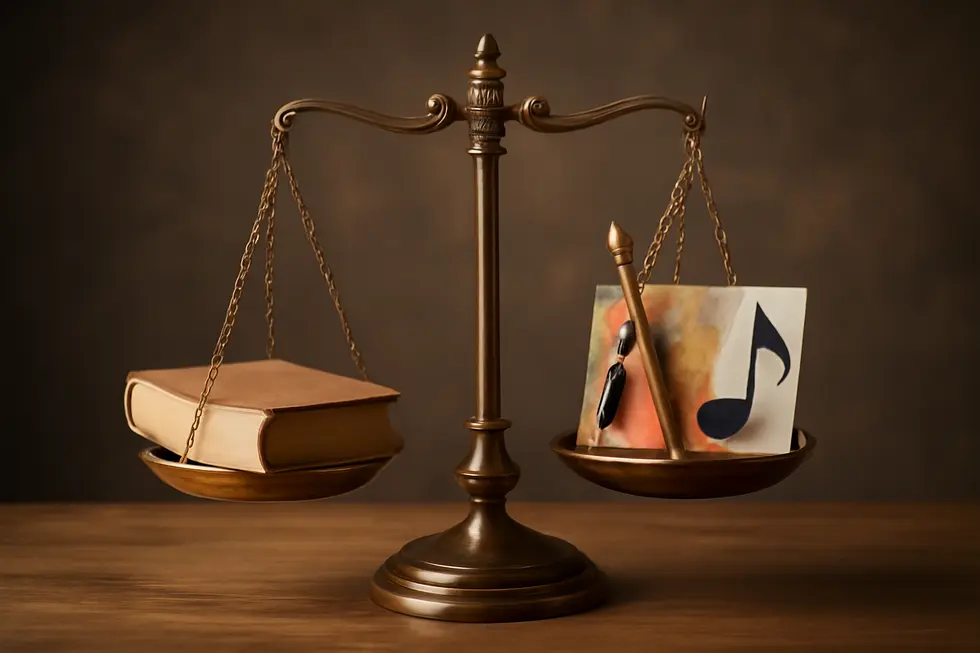
1. Balancing Creativity and Access: A Nuanced Exploration of the Four Fair Use Factors
The fair use doctrine functions as a vital safeguard within copyright law, allowing specific unlicensed uses of protected works that serve public interests such as education, commentary, and research. Central to its application is the nuanced evaluation of four statutory factors, which collectively balance the rights of creators with societal needs. The first factor examines the purpose and character of the use, where transformative purposes—those that add new meaning or message—often favor fair use, even if the use involves commercial elements. This transformation promotes creativity and critical engagement rather than mere duplication.
Assessing the nature of the copyrighted work involves recognizing the distinction between factual and highly creative works. Courts tend to grant more flexibility for fair use in factual contexts, given their public importance, while protecting creative expressions more stringently. Additionally, unpublished works receive added protection due to the author’s control over initial public exposure.
The amount and substantiality factor considers not only how much of the original is used but also the significance of the portion. Even a small excerpt might weigh against fair use if it captures the essence or “heart” of the work; yet, using an appropriate amount to support a transformative purpose can be acceptable.
Lastly, the effect of the use on the market plays a crucial role. If the new use substitutes for the original or harms a potential licensing market, it typically weighs against fair use. However, uses that foster criticism or commentary without displacing the original generally do not harm its market.
Together, these factors demand a holistic, case-by-case analysis that preserves copyright’s protective intent while fostering free expression and innovation. For further insight into how copyright law balances such complexities, see copyright information for books.
2. Balancing Fair Use with Market Realities and Contractual Boundaries
The Fair Use Doctrine serves as a critical balance in copyright law, permitting limited use of copyrighted materials without permission under socially valuable contexts like education, commentary, and transformative endeavors. This balance is carefully evaluated through four factors: the purpose and character of the use, the nature of the copyrighted work, the amount used, and, importantly, the impact on the original work’s market.
Assessing whether a use is fair requires weighing how much the new use transforms the original and whether it competes with the copyright owner’s ability to financially benefit from the work. Even a non-commercial, educational use can be limited if it threatens established licensing markets or diminishes the work’s value. This highlights that fair use is not an absolute right but one tempered by economic realities.
Moreover, fair use can be constrained by contractual agreements. Licenses, terms of service, or usage contracts may restrict how works are used or copied. While fair use is a statutory defense, contract terms can impose practical limits, especially when users voluntarily agree to conditions that waive or restrict fair use applications. These agreements can effectively reduce the scope of permissible uses beyond what copyright law alone provides.
The interplay between fair use, market interests, and contracts is especially relevant in fields like education, digital media, and emerging technologies, where access to content must balance creators’ rights and public benefit. Understanding these dynamics is crucial to navigating copyright boundaries responsibly.
For further insights on copyright limits in commerce, see guidance on copyright distribution rights in business.
3. Navigating Fair Use: Social, Technological, and Economic Dimensions in Copyright Law
The Fair Use Doctrine plays a pivotal role in copyright law by allowing limited use of copyrighted materials without permission, balancing creator rights with public access to knowledge. Its application depends on four factors: the purpose and character of use, which favors transformative, educational, or noncommercial uses; the nature of the original work, with factual materials more likely to qualify; the amount and significance of the portion used; and the impact on the original work’s market value. These criteria ensure a flexible approach rather than a fixed rule.
Socially, fair use nurtures education, free speech, and cultural evolution by enabling commentary, research, parody, and teaching. This fosters a dynamic exchange of ideas vital to a democratic society. Technologically, digital media complicate fair use by enabling easy copying, remixing, and widespread distribution, challenging legal boundaries and enforcement. Platforms hosting user-generated content often blur commercial and noncommercial lines, requiring nuanced consideration to preserve innovation and digital freedom.
Economically, fair use safeguards creators’ ability to monetize their works while preventing excessive restrictions that could stifle creativity and competition. It limits unauthorized commercial exploitation that would harm rights holders but also sustains a marketplace conducive to growth and public benefit.
Ultimately, fair use remains an adaptable legal tool essential to promoting creativity, education, and technological progress. For a deeper understanding, see copyright information for books, which explores related copyright principles in educational contexts.
Chapter 5: Principles of Copyright: First Sale Doctrine and Digital Challenges

1. Navigating the First Sale Doctrine: Bridging Physical Ownership and Digital Licensing
The First Sale Doctrine stands as a cornerstone of copyright law, granting purchasers the right to freely resell, lend, or give away physical copies of copyrighted works once lawfully bought. This principle supports vibrant secondary markets—such as used bookstores and secondhand music shops—by recognizing consumer ownership over tangible copies like books, DVDs, or art pieces. It balances copyright holders’ control with consumers’ freedom to circulate physical goods beyond the initial sale.
However, this doctrine’s application becomes complex in the digital realm. Unlike physical products, digital media—such as e-books, digital music, or software—are often licensed rather than sold outright. Consumers obtain access under licensing agreements that restrict transfer, resale, or sharing rights, effectively excluding these digital copies from the protections of the First Sale Doctrine. This divergence arises because digital files can be endlessly reproduced without quality loss, intensifying copyright holders’ concerns over unauthorized distribution.
This fundamental distinction raises critical legal and economic questions as content consumption shifts increasingly online. While the First Sale Doctrine fosters a robust ecosystem for physical media, digital rights management and licensing structures limit secondary markets for digital goods, reshaping how users access and transfer creative works. Ongoing legal discourse and technological innovation continue to explore how copyright law might evolve to accommodate these differences, potentially redefining consumers’ rights in the digital context.
For a comprehensive understanding of copyright exceptions and limitations, including how they apply to physical and digital contexts, see detailed discussions on copyright exceptions and licensing.
2. Reevaluating Ownership: How Digital Goods Disrupt the First Sale Doctrine and Consumer Rights
The First Sale Doctrine historically empowers consumers to resell or lend physical copyrighted works without the copyright holder’s permission. This principle rests on the physicality and uniqueness of tangible items like books or CDs, where ownership and possession transfer entirely. However, the rise of digital goods profoundly complicates this framework. Digital content, such as eBooks, software, and media files, can be copied perfectly and duplicated infinitely without degradation. Reselling a digital file risks creating multiple identical copies in circulation, cutting against the traditional concept of single ownership and raising concerns about copyright holders’ control and revenue.
Compounding this, digital content is often acquired not as outright purchases but as licensed access. These licensing agreements typically include terms expressly forbidding resale or transfer, effectively replacing ownership with limited rights of use. Courts have generally upheld these licenses, narrowing consumers’ ability to exercise rights that physical owners traditionally enjoyed under the First Sale Doctrine. This shift challenges consumer expectations about what it means to “own” a digital work and restricts freedoms to freely dispose of or lend digital content.
Digital Rights Management (DRM) technologies further control how digital goods are accessed and distributed, reinforcing copyright holders’ market protections. While some businesses explore controlled marketplaces for digital resale, legal and technological hurdles remain significant. The evolving tension between protecting creators and accommodating consumer rights is reshaping how copyright principles adapt to the digital era, demanding new balances in ownership, access, and fair use.
For deeper insight into how copyright law intersects with digital content and consumer protections, see copyright information example business.
3. Navigating the Economic and Social Implications of First Sale Doctrine Limits in Digital Media
The First Sale Doctrine traditionally permits consumers who lawfully purchase physical copyrighted works to resell, lend, or gift those items freely. This principle acts as a critical balance, limiting copyright holders’ post-sale control and enabling vibrant secondary markets. However, digital goods fundamentally disrupt this balance. Unlike physical copies, digital files can be reproduced endlessly without quality loss, which challenges the notion of “owning a particular copy.” As a result, courts and lawmakers often exclude digital products from First Sale protections, restricting consumers from reselling or lending digital music, ebooks, or software.
This exclusion significantly impacts the economy by shrinking secondary markets that benefit consumers and businesses such as libraries and resellers. Copyright holders gain tighter control and increased revenue, enforcing restrictive licensing terms rather than transferring ownership. Societally, this shift restricts consumer rights, limiting how users access and share digital content. It may inadvertently stifle cultural exchange and reuse, as digital works remain locked behind licenses rather than true ownership rights.
Legal debates continue regarding adapting the doctrine for digital realities. Some advocate for legislative changes or new legal interpretations to restore resale rights for digital goods, while others push for transparent licensing systems that fairly balance creator rights with consumer freedoms. Understanding these tensions is vital for grasping how longstanding copyright principles confront evolving digital landscapes.
For more on copyright rights and business implications, see copyright distribution rights in business.
Final thoughts
For business owners, understanding the principles of copyright is essential in protecting and maximizing the value of creative assets that underpin success. From grasping the fundamental protections copyright affords, to knowing what qualifies for protection, recognizing the exclusive rights held by creators, and appreciating the legal exceptions such as fair use and the first sale doctrine, every facet plays a pivotal role. Being informed about these principles not only safeguards your current creations but also guides strategic decisions with emerging digital challenges in mind. By actively managing your intellectual property under the framework of copyright law, you ensure lasting control, leverage opportunities, and avoid costly legal disputes. Ultimately, mastering these principles is an investment in your business’s creative future and financial well-being.
Your IP is the foundation of your success – let’s protect it together before it’s too late. We can’t wait to help you turn your ideas into legally secured assets.
About us
undefined