
Introduction
Logos serve as the visual face of a business, embodying its identity and values in a unique artistic form. Securing legal protection for your logo is essential not only to preserve its originality but also to safeguard your brand’s reputation and competitive advantage. While copyright protection automatically attaches to original logos, registering that copyright with the U.S. Copyright Office unlocks critical legal benefits that empower business owners to defend their creative works effectively. This article guides business owners through the process of registering a logo copyright, clarifies differences between copyright and trademark protections, and outlines actionable steps to maximize the legal advantages of copyright registration. Understanding these facets equips businesses to make informed decisions that enhance their intellectual property strategy and ensure long-term brand security.
Tables of Contents
Chapter 1: Understanding the Process to Register a Logo Copyright
- Legal Distinctions and Foundational Protections: How Copyright and Trademark Safeguard Your Logo
- A Clear Path to Registering Your Logo’s Copyright: Step-by-Step Registration Process
- Bridging Copyright and Trademark: Integrating Logo Protections for Maximum Impact
- Maximizing Legal and Commercial Benefits Through Dual Logo Protection
- Navigating the Digital Path: Seamless Online Systems for Logo Copyright Registration
Chapter 2: Differentiating Registering a Logo Copyright and Trademark Protection
- Legal Distinctions and Protections of Logo Copyrights and Trademarks
- Essential Steps and Requirements in Registering Logo Copyrights and Trademarks
- Balancing Duration and Enforcement: How Copyright and Trademark Protect Your Logo Differently
- Strategic Insights into Copyright and Trademark Roles in Logo Protection
- Understanding the Legal Distinctions and Strategic Benefits of Copyright and Trademark Registrations for Logos
Chapter 3: Practical Steps and Legal Benefits of Registering a Logo Copyright
- Navigating Logo Copyright Registration: Key Steps and Legal Advantages Explained
- Securing Legal Strength: How Copyright Registration Enhances Logo Protection and Enforcement
- Navigating Legal Protections: How Copyright and Trademark Safeguard Your Logo
- Unlocking Economic Value and Brand Strength Through Logo Copyright Registration
- Securing Logo Rights Amid Digital Challenges: Effective Steps and Legal Advantages of Copyright Registration
Chapter 1: Understanding the Process to Register a Logo Copyright

1. Legal Distinctions and Foundational Protections: How Copyright and Trademark Safeguard Your Logo
Legal Distinctions and Foundational Protections: How Copyright and Trademark Safeguard Your Logo
When protecting a logo, understanding the distinct roles of copyright and trademark is crucial. Copyright automatically protects the logo’s original artistic expression once it is fixed in a tangible form—like a digital image file. This protection guards against unauthorized copying of the logo’s specific design but does not secure the logo’s function as a brand identifier in commerce. Although registering the copyright with the U.S. Copyright Office is optional, it reinforces legal rights and allows for enhanced enforcement, including statutory damages in infringement cases.
Conversely, trademark protection targets the logo’s use as a unique identifier of goods or services in the marketplace. Trademark rights arise through actual commerce use and are legally fortified by registration with the United States Patent and Trademark Office (USPTO). This registration grants exclusive rights to the logo as a symbol of the brand, preventing others from using confusingly similar marks and helping maintain brand identity indefinitely, provided the mark is actively maintained.
In practice, copyright secures the logo’s artistic content, whereas trademark safeguards its commercial branding. Registering both offers layered protection—copyright defends the creative design, and trademark defends the logo’s function as a market source indicator. For a comprehensive understanding of these protections, reviewing expert resources on trademark protection for business logos can provide valuable insights, such as those found at trademark protection for business name & logo.
2. A Clear Path to Registering Your Logo’s Copyright: Step-by-Step Registration Process
Registering a copyright for your logo involves a straightforward procedure that secures enhanced legal protection beyond the automatic rights granted upon creation. First, ensure your logo is an original design fixed in a tangible form, such as a digital file. Next, access the U.S. Copyright Office’s online registration portal to begin your application. You will carefully fill out the required information, including details about the logo’s author and claimant, establishing clear ownership.
Uploading a high-quality digital copy of your logo is essential. For unpublished logos, one copy suffices, while published works typically require two. Following the submission of your logo, you must pay the registration fee, generally between $45 and $65, depending on the filing type. After submitting your application and payment electronically, you will receive confirmation and, upon approval, an official certificate of registration.
While not mandatory, applying a copyright notice (©, year, owner) on your logo further informs others of your rights and helps deter infringement. Registering your copyright provides significant legal advantages, including eligibility for statutory damages and attorney’s fees if infringement occurs and a presumption of validity in court. For a full understanding of registration requirements and procedures, the U.S. Copyright Office offers comprehensive guidance on its website.
For businesses seeking broader protection, combining copyright registration with trademark registration offers the strongest defense of both the creative and commercial aspects of a logo. For more detailed insights, explore in-depth information on copyright protections in business from trusted intellectual property resources.
3. Bridging Copyright and Trademark: Integrating Logo Protections for Maximum Impact
Copyright and trademark protection serve distinct but complementary roles in safeguarding a logo. Copyright automatically protects the original artistic expression, covering the creative design embedded in the logo. However, registering this copyright through the U.S. Copyright Office offers critical legal benefits, including a public record of ownership and the right to sue for infringement with potential statutory damages. On the other hand, trademark protection legally secures the logo’s function as an identifier of goods or services in commerce. Unlike copyright, trademarks require active registration through the USPTO, starting with a detailed search to avoid conflicts, followed by application, examination, and maintenance through continued use. Trademark rights can potentially last indefinitely if properly maintained, providing ongoing protection of the logo’s brand identity. When used together, copyright registration defends the logo’s artistic originality while trademark registration prevents others from using similar marks in a confusing way, reinforcing the logo’s commercial value. This strategic combination strengthens enforcement options and helps businesses safeguard both the creative and market significance of their logos. For an in-depth understanding of how trademark protection can safeguard your business name and logo, explore additional insights on trademark protection for business names and logos.
4. Maximizing Legal and Commercial Benefits Through Dual Logo Protection
Logos occupy a unique space where both artistic creativity and commercial identity converge. Protecting a logo using both copyright and trademark registrations offers a layered defense that safeguards not only the design’s original expression but also its role as a brand identifier. While copyright registration secures exclusive rights over the logo’s creative elements and enables stronger enforcement remedies such as statutory damages, trademark registration shields the logo’s use in commerce, preventing others from confusingly imitating the brand. This dual approach enhances market authority by creating multiple avenues to combat infringement, deterring counterfeiters who might exploit different legal loopholes individually.
Beyond legal safeguards, dual registration increases a brand’s intangible asset value, attracting investors and partners with documented proof of ownership and enforceable rights. Trademark protection confines risk by targeting the logo’s commercial use within specific goods or services, while copyright rights provide broad coverage against unauthorized reproduction across industries. Although pursuing both registrations entails separate fees and ongoing trademark maintenance, the resulting comprehensive portfolio supports licensing opportunities and streamlines dispute resolutions. This strategic layering ensures brand integrity and consumer trust endure over time, particularly in an era of rapid digital expansion and global commerce.
For businesses seeking to optimize their logo’s protection, understanding the complementary nature of copyright and trademark is crucial. More insights on protecting logos as trademarks alongside copyright can be found at trademark2go.com/trademark-protection-business-name-logo.
5. Navigating the Digital Path: Seamless Online Systems for Logo Copyright Registration
Registering a logo copyright today is streamlined through sophisticated online systems, which transform a previously cumbersome, paper-based process into a swift digital procedure. In the U.S., the Electronic Copyright Office (eCO) portal offers creators a secure and user-friendly platform to submit their original logo artwork. This system requires applicants to create an account, input detailed metadata about the logo’s authorship and ownership, and upload high-quality digital images in commonly accepted formats like JPEG or PNG.
The online interface guides users through each step, including classification of the work under visual arts and declaration of publication status. Payments for fees—typically ranging between $45 and $65—are processed electronically, adding convenience while ensuring secure transactions. Upon submission, applicants receive immediate acknowledgment with a tracking number to monitor their application’s progress.
These digital systems not only reduce errors via real-time validation but also protect sensitive information through encrypted servers. After a review period that can span several weeks, a certificate of registration is issued, solidifying legal protection with tangible proof of ownership. This streamlined approach greatly enhances accessibility for creators seeking to safeguard the artistic elements of their logos under copyright law.
For a more detailed explanation of how copyright protections operate within business environments, see related insights on copyright’s role in brand name and logo protection.
Chapter 2: Differentiating Registering a Logo Copyright and Trademark Protection
1. Legal Distinctions and Protections of Logo Copyrights and Trademarks
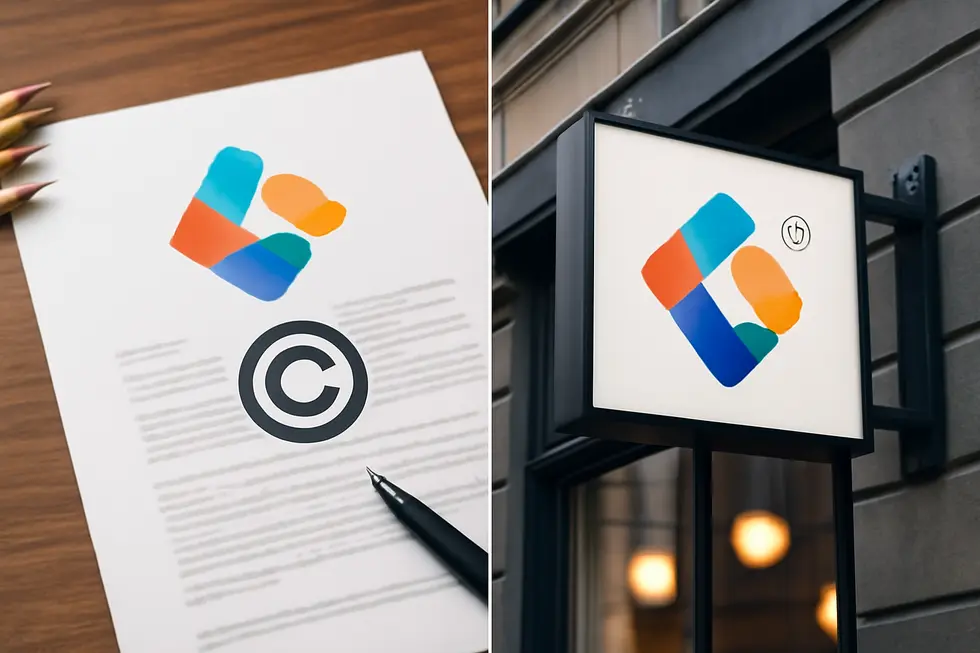
When protecting a logo, understanding the fundamental legal distinctions between copyright and trademark is crucial. Copyright safeguards the original artistic expression of a logo the moment it is created and fixed in a tangible medium, such as a digital file or printed design. This protection is automatic and covers the logo’s unique creative elements, preventing unauthorized reproduction or distribution. However, registering the copyright amplifies these rights, enabling the copyright holder to pursue legal remedies like statutory damages for infringement. In contrast, trademark protection focuses on the logo’s role as a brand identifier distinguishing goods or services in commerce. Unlike copyright, trademark rights require formal registration and proof of use in the marketplace. Trademarks guard against consumer confusion by preventing others from using similar marks that could dilute or infringe on the brand identity. While copyright terms typically last the life of the author plus decades, trademark protection can endure indefinitely with proper maintenance and renewal. Together, these protections form a complementary shield: copyright secures the logo’s artistic originality, while trademark ensures exclusive commercial use and consumer recognition. For a deeper understanding of using copyright protections for logos in business, see copyright language for business owners.
2. Essential Steps and Requirements in Registering Logo Copyrights and Trademarks
Registering a logo for protection involves two distinct legal paths—copyright and trademark—each serving unique roles and requiring different steps.
Copyright protection automatically applies when an original logo is created and fixed in a tangible medium, like a digital file. While registration with the U.S. Copyright Office is not mandatory, submitting an application, a copy of the logo, and paying a fee strengthens enforcement rights, allowing for lawsuits and statutory damages. This process is straightforward and does not involve an examination of similarity or infringement.
Conversely, trademark protection focuses on the logo’s role as a brand identifier in commerce. The process begins with a thorough search to avoid conflicts with existing trademarks. Filing an application with the United States Patent and Trademark Office requires describing how the logo is used with specific goods or services. The USPTO then examines the application, potentially raising inquiries that must be addressed. Approval results in registration that grants exclusive rights, which must be maintained with ongoing use and renewals typically every ten years.
While copyright secures the creative expression of the logo with protection lasting for the author’s life plus decades, trademark safeguards its commercial identity indefinitely, provided it is actively maintained. Together, these registrations offer complementary legal defenses. For a clearer understanding of trademark elements, consult resources on trademark protection for business names and logos.
3. Balancing Duration and Enforcement: How Copyright and Trademark Protect Your Logo Differently
The duration and enforcement mechanisms of copyright and trademark protections for logos reflect their distinct legal purposes. Copyright safeguards the logo’s original artistic expression for the life of the author plus 70 years, or for 95 years from publication in work-made-for-hire cases. This fixed, lengthy term aims to preserve the creator’s rights over the logo design itself, independent of commercial use. Copyright protection is automatic upon creation, but registering it with the U.S. Copyright Office grants essential enforcement advantages, including eligibility to pursue statutory damages and attorney’s fees in infringement cases.
In contrast, trademark protection focuses on the logo’s role as a brand identifier in commerce. Registered trademarks last initially for 10 years, renewable indefinitely as long as the owner actively uses and maintains them. Unregistered trademarks may still establish common law rights based on use, but federal registration with the USPTO grants stronger nationwide legal standing and the right to display the ® symbol.
Enforcement under copyright requires registration before initiating lawsuits and revolves around proving unauthorized copying of the artistic work. Trademark enforcement, however, centers on preventing consumer confusion over the source of goods or services. It involves market monitoring, sending cease-and-desist notices, and legal action where necessary to protect brand reputation. Together, these protections provide complementary layers of security, balancing long-term artistic rights with ongoing commercial identity management. For businesses seeking to maximize logo protection, understanding these key differences is crucial. Additional insights on trademark protection for business names and logos can be found at trademark2go.com/trademark-protection-business-name-logo/.
4. Strategic Insights into Copyright and Trademark Roles in Logo Protection
Protecting a logo effectively requires understanding the distinct roles of copyright and trademark law, aligned with practical business strategies. Copyright protection arises automatically once a logo’s original artwork is created and fixed in a tangible medium. It safeguards the artistic expression of the design for the life of the creator plus seventy years, though it does not prevent others from using similar logos as brand identifiers in commerce. To obtain stronger legal remedies like statutory damages, voluntary registration with the U.S. Copyright Office is advisable.
Trademark protection, by contrast, focuses on the logo’s function as a source identifier in commerce. It requires actual commercial use and federal registration to confer nationwide rights, priority protection from the filing date, and perpetual renewal contingent on continuous use. Essential to this process is conducting a comprehensive trademark search to avoid conflicts and submitting evidence of the logo’s use in the marketplace. Maintaining trademark rights demands vigilance in monitoring infringement and timely renewals.
Many businesses benefit from securing both protections: copyright safeguards the creative design itself while trademark fortifies the logo’s brand identity and exclusivity. This dual approach ensures comprehensive legal coverage, balancing artistic rights with market presence. For those navigating this complex landscape, professional guidance is valuable to tailor protection strategies that align with specific business goals.
For more insight on protecting business logos through trademark registration, see the detailed guidance available on protecting your brand identity.
5. Understanding the Legal Distinctions and Strategic Benefits of Copyright and Trademark Registrations for Logos
When protecting a logo, understanding the distinct roles of copyright and trademark registrations is vital. Copyright automatically safeguards the original artistic expression of a logo as soon as it is fixed in a tangible form, shielding the design’s creativity. While registration with the U.S. Copyright Office is not mandatory, it strengthens enforcement by providing legal evidence and access to statutory damages. However, copyright protection primarily focuses on preventing unauthorized copying of the logo’s creative elements.
Trademark protection serves a complementary but different purpose: it legally identifies a logo as a brand symbol used in commerce to distinguish goods or services. Unlike copyright, trademark rights depend on actual use and require registration at the USPTO for federal enforcement and broader protection. Trademarks can last indefinitely, provided the logo remains in commercial use and registrations are maintained.
Strategically, businesses benefit from securing both forms of protection. Copyright secures the creative foundation of the logo, while trademark preserves its commercial identity and prevents marketplace confusion. This dual approach delivers robust legal remedies across duplication and brand misuse. Careful trademark searches and adherence to registration protocols are essential to avoid conflicts and maximize protection.
For a deeper understanding of how copyright and trademark laws protect brand elements like logos, consult detailed resources focused on trademark protection for business names and logos.
Chapter 3: Practical Steps and Legal Benefits of Registering a Logo Copyright

1. Navigating Logo Copyright Registration: Key Steps and Legal Advantages Explained
Registering a logo’s copyright transforms its automatic protection into a legally fortified asset. While originality grants immediate protection, formal registration with the U.S. Copyright Office provides definitive proof of ownership, crucial in infringement disputes. The registration journey begins with confirming that the logo qualifies as an original artistic work. Next, the creator compiles necessary documents, including identity verification and a clear representation of the logo. This is submitted through the electronic Copyright Office system along with the applicable fee, typically between $45 and $65.
Once the application is filed, it undergoes examination to confirm eligibility. If no objections arise, the registrant receives a certificate that bolsters legal standing, enabling eligibility for statutory damages and attorney fees if infringement occurs. Besides legal enforcement, registration enhances the logo’s market value by signaling serious intellectual property management. Practically, ensuring the work’s originality and careful documentation—including creation dates and design iterations—can deter unauthorized use. Incorporating the © symbol and watermarking are effective preventive measures.
For businesses aiming to protect their logos, understanding these steps and benefits is vital. Registering copyright complements trademark protections by securing artistic expression, while trademarks focus on commercial brand identity. Detailed insights on the legal nuances for copyright in business contexts can be found in resources like trademark2go.com/copyright-language-business-owners.
2. Securing Legal Strength: How Copyright Registration Enhances Logo Protection and Enforcement
While a logo automatically receives copyright protection upon creation, registering it with the U.S. Copyright Office provides critical legal advantages. This registration acts as public proof of ownership, strengthening your position if infringement disputes arise. It grants the exclusive rights to reproduce, distribute, and create derivative works based on the logo, helping you control its use beyond initial design. The registration facilitates enforcement by allowing you to file lawsuits and potentially seek statutory damages, which are unavailable without formal registration.
To register, you must submit a fixed form of your logo (typically a digital file), complete the application, and pay the associated fee via the electronic system. Maintaining detailed records of creation and registration supports your claims if ownership is challenged. Although trademarks generally protect the commercial use of a logo, copyright registration safeguards its original artistic elements. Together, these protections deter unauthorized use and solidify your rights in both creative and business realms.
For additional understanding on how trademarks complement copyright in protecting your brand identity, refer to guidance on effective trademark protection for business names and logos.
3. Navigating Legal Protections: How Copyright and Trademark Safeguard Your Logo
Registering a logo copyright begins the moment your original design is fixed in a tangible form—whether digital or printed—granting you automatic copyright protection. However, formal registration with the U.S. Copyright Office strengthens your rights by establishing clear legal evidence of ownership and enabling remedies like statutory damages and attorney fees if infringement occurs. This process requires submitting an application along with a copy of the logo and paying a fee online. Adding a copyright notice to your logo, while optional, further signals ownership and discourages unauthorized use.
On the other hand, trademark registration protects the logo as a source identifier in commerce, preventing others from using confusingly similar marks on related goods or services. It is not automatic and necessitates a thorough trademark search, filing a detailed application with the USPTO, responding to examination queries, and maintaining the registration through active use and renewals. Successfully registering a trademark grants exclusive commercial rights, a legal presumption of ownership, and the right to use the ® symbol.
Though copyright safeguards your logo’s creative expression, trademarks secure its role as a brand symbol in the marketplace. For many businesses, combining both registrations offers the most comprehensive protection. This dual approach is vital to effectively defend your logo’s design and its distinct commercial identity. For further insights into trademark protection for logos and brand names, see trademark protection for business name and logo.
4. Unlocking Economic Value and Brand Strength Through Logo Copyright Registration
Unlocking Economic Value and Brand Strength Through Logo Copyright Registration
Registering a logo copyright not only secures legal ownership but also enhances a brand’s market position and economic potential. The process begins with ensuring your logo is an original creative work fixed in a tangible format. Filing an application and submitting your logo to the U.S. Copyright Office grants you exclusive rights to reproduce, display, and create derivative works, pivotal for protecting your brand’s artistic identity.
Beyond legal safeguards, registration serves as a powerful branding tool. It creates an official public record, discouraging infringement and reinforcing customer recognition in competitive markets. A registered logo can be licensed or sold, opening additional revenue streams that increase business value. This legal recognition also signals professionalism and reliability to investors and partners, making your brand more attractive for collaboration and growth.
Moreover, copyright registration complements trademark protection, together preventing competitors from unauthorized use while strengthening your market share. The combination secures the logo as both an artistic creation and a commercial symbol.
Although registration involves fees, the long-term advantages in brand differentiation, enforcement capabilities, and asset valuation make it a prudent investment. For businesses seeking comprehensive protection and strategic growth, understanding these benefits is essential. More details on intellectual property rights can be found in resources like the copyright brand name logo protection guide.
5. Securing Logo Rights Amid Digital Challenges: Effective Steps and Legal Advantages of Copyright Registration
Registering a logo copyright involves more than just submitting an application; it requires understanding the unique challenges posed by the digital era. While copyright protection for your original logo exists automatically once it is created and fixed in a tangible form, formal registration with the U.S. Copyright Office unlocks vital legal benefits. The registration process includes preparing a high-quality digital version of your logo, completing an online application through the office’s eCO system, and paying the associated fee. These steps create a public record that serves as strong evidence of ownership in any legal dispute.
Legal advantages from registration include the ability to pursue statutory damages and attorney’s fees if infringement occurs, provided the registration is timely. This creates a valuable deterrent against unauthorized use. However, the digital environment complicates protection efforts, as logos can be effortlessly copied and circulated worldwide online. Since copyright laws are territorial, safeguarding your logo globally may require additional strategies beyond U.S. registration, such as leveraging international treaties.
Emerging tools like blockchain registries and AI monitoring software are becoming essential for tracking unauthorized digital usage. Combining copyright registration with trademark protection offers the strongest defense against both artistic copying and commercial misuse. For a more comprehensive understanding of these protections, reviewing detailed trademark resources such as trademark protection for business names and logos can be invaluable.
Final thoughts
Registering a logo copyright is a strategic investment that goes beyond automatic protection granted at creation. For business owners, this process solidifies your ownership rights, providing powerful enforcement tools and eligibility for enhanced legal remedies like statutory damages in case of infringement. Distinguishing the unique roles of copyright and trademark is critical for securing both the artistic originality and commercial identity of your logo. By understanding and completing the registration process, you ensure your logo stands as a protected asset that supports your brand’s growth and resilience in competitive markets. Taking these informed steps now saves you from costly disputes later and reinforces your business’s foundation as a creator and innovator.
Your IP is the foundation of your success – let’s protect it together before it’s too late. We can’t wait to help you turn your ideas into legally secured assets.
About us
undefined