
Introduction
Navigating the intricate world of business requires an understanding of the concepts that provide legal protection and brand recognition. One such concept is the service mark, a vital tool for businesses that offer services rather than products. A service mark allows a company to differentiate itself in a competitive marketplace while legally protecting its brand identity. In this detailed guide, we will explore the fundamental aspects of service marks, their legal framework, the distinctions from trademarks, practical examples, their implications for businesses, and the future trends influenced by digitalization and globalization. Each chapter will enhance your understanding and empower you to effectively protect your brand assets.
Tables of Contents
Chapter 1: Unpacking Service Marks: Understanding Their Role in the Marketplace
- The Integral Role of Service Marks: Purpose, Protection, and Unique Identity
- Service Marks in Commerce: Navigating Common Law and Registration Dynamics
Chapter 2: Navigating the Intricacies of Service Marks: Legal Definitions and Protections
- In-Depth Exploration of Service Marks: Definitions, Legal Registration, and Their Unique Scope
- Navigating the Path to Protection: Registration and Enforcement of Service Marks
Chapter 3: Clarifying the Nuances Between Service Marks and Trademarks
- Understanding the Unique Aspects of Service Marks in Business Identification
- Legal Distinctions: Service Marks vs. Trademarks and Their Protections
Chapter 4: Building a Brand: The Role and Importance of Service Marks in Commerce
- Service Marks in Action: Distinct Branding for Service Providers
- Service Marks in the Real World: Diverse Applications Across Critical Sectors
Chapter 5: Safeguarding Your Service Identity: The Role of Service Marks in Business Growth
- Harnessing Service Marks for Robust Brand Protection and Distinct Market Presence
- Understanding the Legal Framework of Service Marks and Their Enforcement for Businesses
Chapter 6: Navigating the Digital Frontier of Service Marks: Innovations and Challenges
- Redefining Service Marks in the Age of Virtual Goods and Artificial Intelligence
- Adapting to Geopolitical Fragmentation and Regulatory Challenges in Service Marks
Chapter 1: Unpacking Service Marks: Understanding Their Role in the Marketplace

1. The Integral Role of Service Marks: Purpose, Protection, and Unique Identity
A service mark serves as a pivotal identifier that differentiates a service provider from others in the competitive marketplace. Specifically designed to establish a clear origin for services rather than goods, service marks play a crucial role in fostering consumer trust and brand loyalty. By associating a specific mark with a particular company or individual, consumers can easily recognize and recall the unique services offered, from consulting firms to online retailers.
Legal protection for service marks is integral to their function, preventing unauthorized use that might confuse consumers or dilute the brand’s identity. Under trademark law, owners gain exclusive rights to their service marks, ensuring that any use of a confusingly similar mark can be challenged in court. This legal framework not only safeguards the owner’s market position but also underscores the importance of distinctiveness in service marks. Only marks that successfully distinguish a service provider from its competitors can secure protection.
Distinctiveness is critical; the mark must be able to signal a unique service. This can be established through inherent qualities of the mark, such as creativity and arbitration, or through acquired recognition over time. For example, a mark initially deemed descriptive might gain protection if it becomes closely tied to a service in the public’s mind. Overall, service marks are not just identifiers; they represent significant legal and brand assets for service providers, crucial for maintaining their reputation and competitive edge in the marketplace. For further insights into protecting business identifiers, see Trademark Protection for Business Names and Logos.
2. Service Marks in Commerce: Navigating Common Law and Registration Dynamics
Service marks are essential tools in the competitive landscape of service delivery, providing legal shields around brand identities. Unlike trademarks that cater to physical products, service marks specifically identify the source of intangible services, thus holding unique significance for businesses like advertising firms, restaurants, and healthcare providers. The symbol ℠ is used to denote an unregistered service mark, while the ® symbol signifies federal registration. Both symbols offer critical insights into the standing of the service mark.
Protection of a service mark can be established through common law, which provides rights based on actual usage in commerce, even before registration takes place. This means that a business actively using a service mark may enjoy protections within its geographic area, derived from consumer recognition. However, formal registration through the U.S. Patent and Trademark Office (USPTO) or at state levels enhances these protections, broadening enforcement capabilities under the Lanham Act against potential infringers.
To qualify for registration, a service mark must demonstrate distinctiveness, serving as a clear identifier of the service’s source. Marks that are generic or merely descriptive often face rejection. Infringement occurs when a similar mark is used in commerce, leading to potential consumer confusion. To prove infringement, a plaintiff must establish the use of the mark by another party, the commercial nature of that use, and a likelihood of confusion. Understanding these complexities is paramount for any service provider safeguarding their brand integrity.
Chapter 2: Navigating the Intricacies of Service Marks: Legal Definitions and Protections

1. In-Depth Exploration of Service Marks: Definitions, Legal Registration, and Their Unique Scope
A service mark stands as a pillar of intellectual property, specifically crafted to identify and distinguish the source of a service, rather than a product. This critical distinction sets it apart from trademarks, which typically pertain to tangible goods. For instance, while a trademark might relate to the design of a popular shoe brand, a service mark would apply to the services rendered by a reputable delivery company, thus ensuring consumers can identify who is providing specific services. In legal terms, service marks can include words, names, symbols, and slogans, encompassing a diverse range of identifiers utilized in commerce.
The complexities surrounding the registration of service marks mirror those of trademarks, necessitating applications filed with the United States Patent and Trademark Office (USPTO). To secure a service mark, entities must showcase either existing use in commerce or a genuine intent to utilize the mark in connection with their services. Upon successful registration, owners are conferred exclusive rights that empower them to prevent unauthorized use of identical or confusingly similar marks, enhancing both their brand’s integrity and market position.
Internationally, varying jurisdictions have harmonized such definitions, allowing service marks to gain protection beyond domestic borders, thereby enabling businesses to operate with reassurance against confusing or dilutive uses of their marks. The unique realm of service marks, while closely tied to trademark principles, serves a specialized function, reinforcing the importance of recognizing the inherent differences between the services and goods sectors in intellectual property law. For more insights on trademark protection, visit https://trademark2go.com/trademark-protection-business-name-logo/.
2. Navigating the Path to Protection: Registration and Enforcement of Service Marks
The legal framework governing service marks involves a structured yet intricate process aimed at certifying the uniqueness of services identified by a mark. To initiate this journey, a business must file a detailed application with the appropriate intellectual property office, such as the U.S. Patent and Trademark Office. This application is critical; it not only specifies the services for which the mark is intended but also adheres to standardized classification systems, such as the Nice Classification, to enhance clarity and organization.
One of the cornerstone requirements for registration is the distinctiveness of the service mark. A mark must be able to differentiate the services of one organization from those of another, as emphasized by international standards like the Agreement on Trade-Related Aspects of Intellectual Property Rights (TRIPS). This distinctiveness is essential for successfully navigating the registration process, which typically includes rigorous examination phases, such as publication for opposition and substantive review.
Once a service mark is registered, the owner enjoys exclusive rights for a duration of ten years, with the possibility of renewal. This registration not only legitimizes ownership but also grants the ability to enforce these rights against unauthorized uses, ensuring that the mark’s association with specific services remains protected. Such enforcement rights are crucial in upholding the value of the brand, allowing for legal actions against infringers under trademark laws. For businesses considering service marks, understanding these registration requirements and protection mechanisms is fundamental to safeguarding their offerings and competitive edge.
Chapter 3: Clarifying the Nuances Between Service Marks and Trademarks
1. Understanding the Unique Aspects of Service Marks in Business Identification
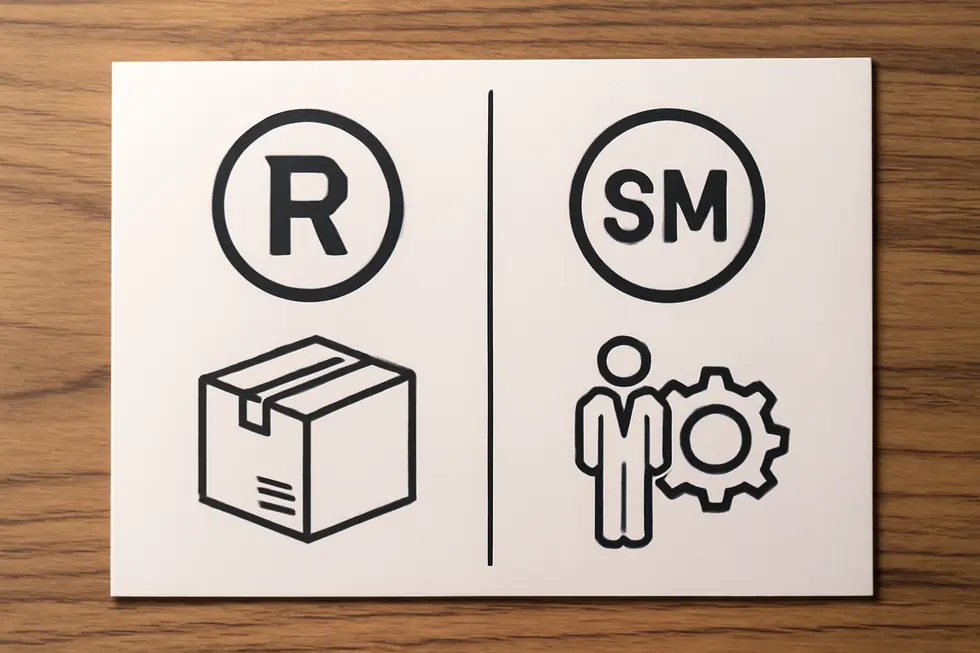
While trademarks are widely recognized for identifying tangible products, service marks play a crucial role in distinguishing services offered by businesses. This distinction is essential for maintaining brand identity and establishing trust with consumers. A service mark may consist of a name, logo, or slogan specifically tied to a service, ensuring that customers can recognize and distinguish one provider from another. For example, a consulting firm might use a particular tagline to represent its identity in the marketplace, which qualifies as a service mark.
Importantly, both types of marks provide similar protections under the law, but their applications differ significantly. A trademark signifies a company’s goods, whereas a service mark denotes the services rendered. This core differentiation impacts how businesses advertise and promote their offerings. For instance, a restaurant may leverage a service mark to influence consumer perception of its dining experience, while simultaneously holding trademarks for its food items.
The registration process for service marks can provide enhanced legal defenses against infringement. Businesses can either register their service marks federally with the U.S. Patent and Trademark Office (USPTO) or rely on common law protections based on consistent use in commerce. Regardless of the route taken, proper use and clear identification of the service mark in promotional materials can reinforce the company’s brand and mitigate potential legal disputes.
For a deeper understanding of the implications of registration and usage, see trademark protection for your business name and logo.
2. Legal Distinctions: Service Marks vs. Trademarks and Their Protections
Understanding the nuances between service marks and trademarks is essential in the realm of intellectual property. At the core, a service mark serves to identify the source of defined services, whereas a trademark plays this role for tangible goods. This foundational difference delineates how each type is utilized and protected under the law, particularly within the framework of the Lanham Act, which governs trademark law in the United States.
For service marks, registrability hinges on demonstrating usage in commerce through marketing or advertising services — such as displaying the mark on a website or promotional materials. Conversely, for trademarks, tangible placement on the product itself or its packaging is required. Therefore, the evidence required for registration varies significantly between the two.
Both marks share a similar legal structure regarding enforcement and protection, which necessitates proof of three critical elements: the use of the mark, its application in commerce, and the potential for consumer confusion about the source of the goods or services. Protecting a service mark requires vigilance against infringement, as unauthorized use of a confusingly similar mark could undermine brand integrity.
Ultimately, while service marks and trademarks function under the same umbrella of protective laws, their primary difference lies in their realm of application — service marks denote a service provider, ensuring consumer clarity in a crowded marketplace. For further insights on securing your brand identity, the USPTO and additional legal resources provide valuable guidance.
Chapter 4: Building a Brand: The Role and Importance of Service Marks in Commerce

1. Service Marks in Action: Distinct Branding for Service Providers
A service mark differentiates the source of services, acting as a potent branding tool in various industries. For instance, a local plumbing company might market itself with the slogan “The Leak Fixers”, effectively using this phrase to establish a unique identity in a crowded marketplace. This slogan conveys not just the service offered but also aims to evoke trust and reliability among potential customers, fostering brand recognition.
In the realm of fast food, consider how a major player like McDonald’s employs service marks to identify its overarching brand. While it has specific trademarks for products like the Big Mac®, its service marks encompass the food service experience, distinguishing it from competitors and solidifying consumer loyalty. Just as product trademarks serve to identify tangible goods, service marks illuminate the pathway for consumers to associate specifically with service offerings.
Essentially, service marks can take a variety of forms including logos, distinctive names, and slogans—anything that establishes a unique link between the consumer’s experience and a specific service provider. The effectiveness of these marks hinges on their distinctiveness, which courts and trademark offices assess to ensure that they embody unique identifiers that stand out from generic or merely descriptive terms. The more consistently a service mark is utilized and recognized in commerce, through signs, brochures, or online platforms, the stronger its distinctiveness evolves, enabling companies to craft dependable and recognizable brands. This blend of creativity and legal protection offers businesses a powerful means to foster brand loyalty and mitigate consumer confusion.
2. Service Marks in the Real World: Diverse Applications Across Critical Sectors
Service marks play a vital role in various sectors, serving as a legal identifier for services provided by a business, much like trademarks do for products. These marks are crucial in distinguishing one service provider from another, enabling consumers to make informed choices in a crowded marketplace. In the service industry, which includes healthcare, education, and hospitality, businesses often use service marks to enhance their brand identity. For instance, educational institutions may employ a service mark to promote specific courses or programs, while hospitals might utilize a name to define their healthcare services.
In the technology realm, companies offering software solutions and cloud computing services use service marks to build brand trust. A well-known example can be seen with companies like Oracle, whose service marks identify their cloud offerings. Here, service marks not only help in differentiating services but also assure customers of the quality they can expect, enforced through rigorous quality control measures within the sector.
Moreover, in Customer Relationship Management (CRM), businesses utilize service marks to highlight their customer engagement platforms. For instance, Salesforce’s name serves as a service mark, signaling reliability and efficacy in managing customer interactions.
Legal protection for service marks is of paramount importance as well; registered marks provide businesses with exclusive rights, safeguarding against potential infringement. In summary, the application of service marks across various sectors highlights their significance in fostering brand identity, consumer confidence, and legal protection in the modern commercial landscape.
Chapter 5: Safeguarding Your Service Identity: The Role of Service Marks in Business Growth

1. Harnessing Service Marks for Robust Brand Protection and Distinct Market Presence
The definition of a service mark fundamentally shapes how businesses protect their brand identity and carve out a competitive edge in the marketplace. As a unique identifier for services rather than goods, a service mark helps distinguish a company’s offerings, generating trust and recognition among consumers. This clarity leads to critical implications for brand protection.
By registering a service mark, businesses secure exclusive rights to their service identifiers, effectively barring competitors from using similar marks that could confuse consumers or tarnish the brand’s image. With this legal shield, companies can pursue infringement claims, demand damages, and utilize the ® symbol to assert their rights publicly. Such protection not only deters unauthorized use but reinforces consumer confidence in the brand’s integrity.
Moreover, service marks significantly contribute to market differentiation. They help businesses communicate the source and quality of their services, fostering customer loyalty and repeat patronage. A distinct service mark enhances visibility, allowing clients to effortlessly identify and choose a brand over its competitors, particularly in crowded markets where service excellence and reputation are pivotal.
Beyond immediate benefits, service marks can also appreciate in value as intangible assets, which can be franchised or sold. For businesses eyeing global expansion, securing service marks internationally minimizes risks associated with trademark squatting, thus safeguarding the brand’s identity in diverse markets. Therefore, a well-defined service mark is an instrumental asset in shaping a business’s success trajectory.
2. Understanding the Legal Framework of Service Marks and Their Enforcement for Businesses
The service mark operates within a robust legal framework designed to protect the unique identifiers of service providers. Functioning similarly to trademarks, service marks specifically signify the source of services rather than products, ensuring that consumers can distinguish one provider from another. Under the Agreement on Trade-Related Aspects of Intellectual Property Rights (TRIPS), member states must safeguard marks that can differentiate services, thus formalizing the definition of service marks at an international standard. For businesses operating in jurisdictions like Indonesia, the establishment of rights is contingent upon registering the service mark, highlighting the necessity of securing statutory protection in order to ward off unauthorized usage.
The implications for businesses, such as law firms or financial institutions, are significant. Securing a service mark offers exclusive rights in commerce, empowering owners to defend against infringement. Moreover, registered service marks enable businesses to license their marks, creating revenue opportunities while maintaining quality control over brand representation. Conversely, neglecting to register a mark can expose organizations to risks, including challenges establishing ownership and proving validity in disputes.
Enforcement methods are crucial to ensure compliance within licensing agreements, which should stipulate quality standards clearly. Regular audits, alongside penalties for non-compliance, safeguard both the brand integrity and consumer trust. Failure to uphold maintenance and renewal obligations can lead to the loss of exclusivity, emphasizing the need for vigilant brand management as part of a holistic intellectual property strategy in today’s competitive marketplace. For further insights on brand protection, consider resources on trademark safeguarding at https://trademark2go.com/trademark-protection-business-name-logo/.
Chapter 6: Navigating the Digital Frontier of Service Marks: Innovations and Challenges

1. Redefining Service Marks in the Age of Virtual Goods and Artificial Intelligence
The digital impact on service mark definition is rapidly evolving as brands navigate a landscape increasingly dominated by virtual goods and AI technologies. With the rise of platforms such as the metaverse, service marks have expanded to encompass a new category of digital offerings, including virtual fashion, non-fungible tokens (NFTs), and immersive online experiences. Brands must take proactive measures to secure and enforce service marks for these virtual assets, requiring robust trademark strategies that go beyond traditional definitions.
Simultaneously, AI technologies are transforming the process of trademark management. Advanced AI tools can streamline trademark applications by suggesting unique marks less likely to incur conflicts, thus accelerating the registration process. These tools also provide real-time monitoring capabilities that detect unauthorized use of service marks across various digital platforms, enabling swift responses to potential infringements. This dynamic interaction not only enhances brand protection but also tailors service representation to the digital environment.
In addition, as businesses adapt to a more digitized economy, traditional service models are shifting towards subscription-based and platform-oriented frameworks. This transformation further redefines the parameters of service marks, expanding their implications within digital realms. Moreover, leveraging AI-driven technologies for customer engagement creates personalized service experiences that can be trademarked, expanding a brand’s digital identity.
The integration of AI and digital innovations necessitates not only a technological adjustment but also a cultural shift within organizations as they redefine branding strategies to remain competitive. As the landscape continues to transform, the future of service mark definitions will be invariably linked to these advancements, blending tradition with innovation.
2. Adapting to Geopolitical Fragmentation and Regulatory Challenges in Service Marks
The landscape of service marks is being transformed by globalization challenges, particularly those arising from geopolitical fragmentation and regulatory compliance. As countries navigate evolving international relations, businesses are compelled to localize their operations to meet the distinct needs of different regions. This trend necessitates the customization of data storage practices and information technology systems, alongside adapting service offerings to align with a complex web of regulations that vary greatly across jurisdictions.
In this delicate environment, companies face escalating operational costs and pressure to re-evaluate existing contracts and supply chains. The rise in sanctions, tariffs, and export controls complicates this further, creating an environment where businesses must adeptly maneuver through numerous, often conflicting regulations. Integrating geopolitical insights into strategic planning is essential, as it allows firms to anticipate risks related to sanctions and adapt proactively.
The digital transformation of services further complicates matters, posing challenges in trademark and branding protections. As we move towards a future intertwined with advanced technologies like the metaverse and AI, service providers must prioritize the safeguarding of intellectual property in virtual settings. This includes employing innovative monitoring strategies and ensuring robust trademark protections are in place.
For instance, the semiconductor industry’s shift towards regionalized supply chains serves as a stark reminder of the fragility of global systems and reflects a broader move towards self-reliance. Consequently, for service providers, building a resilient and adaptable business model is not just advantageous but imperative. Overall, navigating the complexities of these changes requires a committed approach to compliance and strategic foresight.
Final thoughts
Understanding the definition and implications of service marks is essential for business owners looking to protect their brand identity effectively. By navigating the legal frameworks, distinguishing service marks from trademarks, and recognizing their practical applications, businesses can secure their position in the market. Additionally, staying ahead of future trends will allow companies to adapt and thrive in an increasingly digital and global environment. The knowledge you gain about service marks not only safeguards your business but also enhances its overall value.
Your IP is the foundation of your success – let’s protect it together before it’s too late. We can’t wait to help you turn your ideas into legally secured assets.
About us
undefined